This post may contain affiliate links, which means if you purchase through these links, we may receive a small commission at no cost to you. Thank you for supporting our website.
In Partnership with Austrian National Tourist Office. All opinions are our own.
Austria is quickly becoming one of our favourite places to ski, thanks to its impeccable hospitality, wonderful food, and consistently excellent snow conditions. On this 7-day winter ski trip in Austria, we started in Salzburg before making our way to Kitzbühel and Zell am See, creating the ultimate Alpine adventure.
It was one of the few trips where we stepped off the plane to falling snow, and arriving at our hotel that evening, as it began to settle, only grew our excitement to get out and explore. From historic cities to world-class ski resorts, Austria delivers both atmosphere and adventure in winter.
In this guide, we share everything you need to plan your own trip, including how to get to Austria, how to get around Austria, our honest reviews of Kitzbühel and Zell am See ski resorts, known as some of the best ski resorts in Austria, alongside our exact 7-day winter itinerary. You’ll also find our favourite places to stay, restaurants, and plenty of non-ski winter activities, along with top tips for planning a ski trip to Austria.
How to Use This Guide
Jump to any section using the contents table below.
Click a heading in the guide to pop back to the contents and explore other sections.
Airports
Austria has several international airports with direct flights from the UK, making it easy to plan a ski trip.
Vienna International Airport (VIE) - As the capital, Vienna Airport is well-connected to many destinations; however, it is further from the ski resorts included in this itinerary.
Innsbruck Airport (INN) - Known as Austria’s winter sports hub, Innsbruck is an excellent gateway to nearby ski resorts and ideal for ski trips.
Salzburg Airport (SZG) - Located near the historic city of Salzburg, Mozart’s birthplace, this airport offers a central location with easy access to several ski resorts.
Munich Airport (MUC) - Direct bus transfers with KitzSki Xpress from Munich to Kitzbühel.
For this 7-day Austria ski itinerary, we’d recommend flying into Innsbruck or Salzburg. While there are ski resorts closer to Vienna, they are not included in this itinerary.
Plan your next adventure
If you book through our links, you help support our website at no extra cost to you - thank you!
Getting around Austria is actually pretty easy. You can use public transport, rent a car, or book airport transfers. We found everything ran smoothly even in winter, and we’ll go through each option to help you pick what works best for you.
Public Transport
We mostly used public transport, and it worked really well. Trains and buses are reliable and efficient, with timetables usually on digital screens showing their arrival time. Even in the snow, trains keep running all year.
Carrying ski gear can be a bit tricky, so we packed light and used bags that were easy to carry. On buses, it can be tight, but there is usually space for luggage, and the trains have more space for ski gear.
useful apps
ÖBB Scotty App – Shows trains and buses across Austria, helps plan trips and keeps you updated on any delays.
Salzburg Verkehr App – Perfect for Salzburg and Zell Am See, with real-time info, and you can buy tickets on your phone.
Renting a Car
We did not rent a car for this trip, but if you want more freedom, it is a good option, especially for smaller resorts and much more convenient for families. Roads are generally well-maintained, and most rental cars come with winter tyres.
Driving in heavy snow can be tricky, and parking in ski towns is often limited, so unless you plan to explore more outside the resort, public transport can be easier and less stressful.
Airport Transfers
If you do not want to worry about public transport or driving, you can book a private or shared transfer from the airport to your ski resort. Companies like Alps2Alps or Alpin Bus can take you straight to your accommodation. This is really handy if you arrive late or have a lot of ski gear. There are also options like the KitzSki Xpress from Munich to Kitzbühel.
Private transfers are one of the most expensive ways to get around, but also probably the most stress-free. You get picked up at the airport and dropped off at your hotel, which is especially handy if you have lots of heavy ski gear or arrive late.
Taxi
Taxis are also an option, but like private transfers, they tend to be expensive. One night in Salzburg, we arrived late during heavy snow and got a taxi to our hotel in Elixhauser. It was quick and easy, but it definitely cost more than a train or bus. Check if your hotel offers transfers; some hotels arrange them at a lower cost than public taxis.
Austria is one of the best places to ski in Europe, known for its reliable snow conditions throughout the winter season. Thanks to its alpine geography, Austria consistently receives some of the most reliable snowfall in Europe, making it a perfect choice for a winter ski trip, especially if you want to avoid the risk of poor snow conditions.
Beyond the skiing, Austria truly stands out for its world-class hospitality and warm, welcoming atmosphere. Many ski resorts are home to family-run hotels and guesthouses, where you are treated less like a tourist and more like a guest.
After a day on the slopes, it’s easy to find yourself in a cosy mountain hut, experiencing the essence of Gemütlichkeit, a uniquely Austrian sense of warmth, comfort, and cosiness. Warm up with traditional dishes like Gulaschsuppe, Kaiserschmarrn (one of our favourites), or the classic ski resort favourite, Germknödel, a fluffy dumpling served with vanilla sauce and poppy seeds.
Austria generally enjoys reliable snowfall throughout the ski season. However, the best time to ski can vary depending on the altitude of each resort. Higher-altitude resorts usually have a longer season, which is worth keeping in mind when planning your trip. As a general rule, the ski season runs from December to April, with peak season typically between January and March.
In December, you can enjoy Christmas markets and the early season, usually with fewer people outside of the Christmas holidays. In January and February, you find the best snow conditions, usually with the most snowfall in the season.
Come spring, with longer days and more chances for bluebird days, blue skies, and skiing conditions are best early in the morning. With potentially slushy conditions at lower altitudes in the afternoons. It’s best to avoid the school holidays when you can, for better deals and fewer people.
This winter itinerary starts in Salzburg and takes you to some of the most iconic ski resorts in Austria, a short train ride or drive away. It can be adjusted, but it will take you into both Salzburgland and Tyrol, some of the most scenic spots in Austria, to explore in winter.
It will give you a balance of skiing and, of course, aprés, which includes relaxing spa time, other winter activities, and food recommendations along the way. Whether it’s your first visit to Austria or a return trip, this itinerary showcases some of the very best of winter adventures in Austria for skiing and relaxation.
Day 1 - Salzburg
Day 2 - Salzburg
Day 3 - Kitzbühel
Day 4 - Kitzbühel
Day 5 - Zell Am See
Day 6 - Zell Am See
Day 7 - Salzburg
Once you land at Salzburg airport, there are several ways to get to the city centre. The cheapest way to get into Salzburg is by trolleybus, an electrified bus that is efficient and eco-friendly. You can also get a taxi from the airport, which will be the most expensive option.
When staying in SalzburgerLand, make sure you get a mobility ticket. This ticket gives you free access to public transport to and from your accommodation on your day of arrival and departure.
How to get your mobility ticket:
Before you travel via the Salzburg Verkehr app (ideal if you arrive at the airport or train station)
Or find more information at www.guestmobilityticket.at
For our first night, we stayed at the Elixhauser Wirt Romantik Spa Hotel, just outside Salzburg in the charming village of Elixhausen. It offered a quieter, more local feel while still being well-connected to the city. The hotel itself has been family-run for over 28 generations, and is a prime example of Austrian hospitality.
We arrived late after a day of travel, and the hotel kindly arranged a platter for us to enjoy in our room, which was a very welcome touch. We stayed in a Superior Double Room overlooking the village church, with heavy snow gently falling outside. The room struck a perfect balance between snug, traditional style and modern, elegant interiors.
The bathroom was generously sized with a separate toilet, and robes and towels were provided for use in the spa. One thing to note is that slippers or flip-flops are not supplied, so it is worth bringing your own, or you can purchase a pair at the hotel.
It’s also worth noting that breakfast on weekends runs until 12 pm. This makes it ideal for a slow, lazy morning or a relaxed brunch, a perfect start to a ski trip and a nice way to save on lunch too.
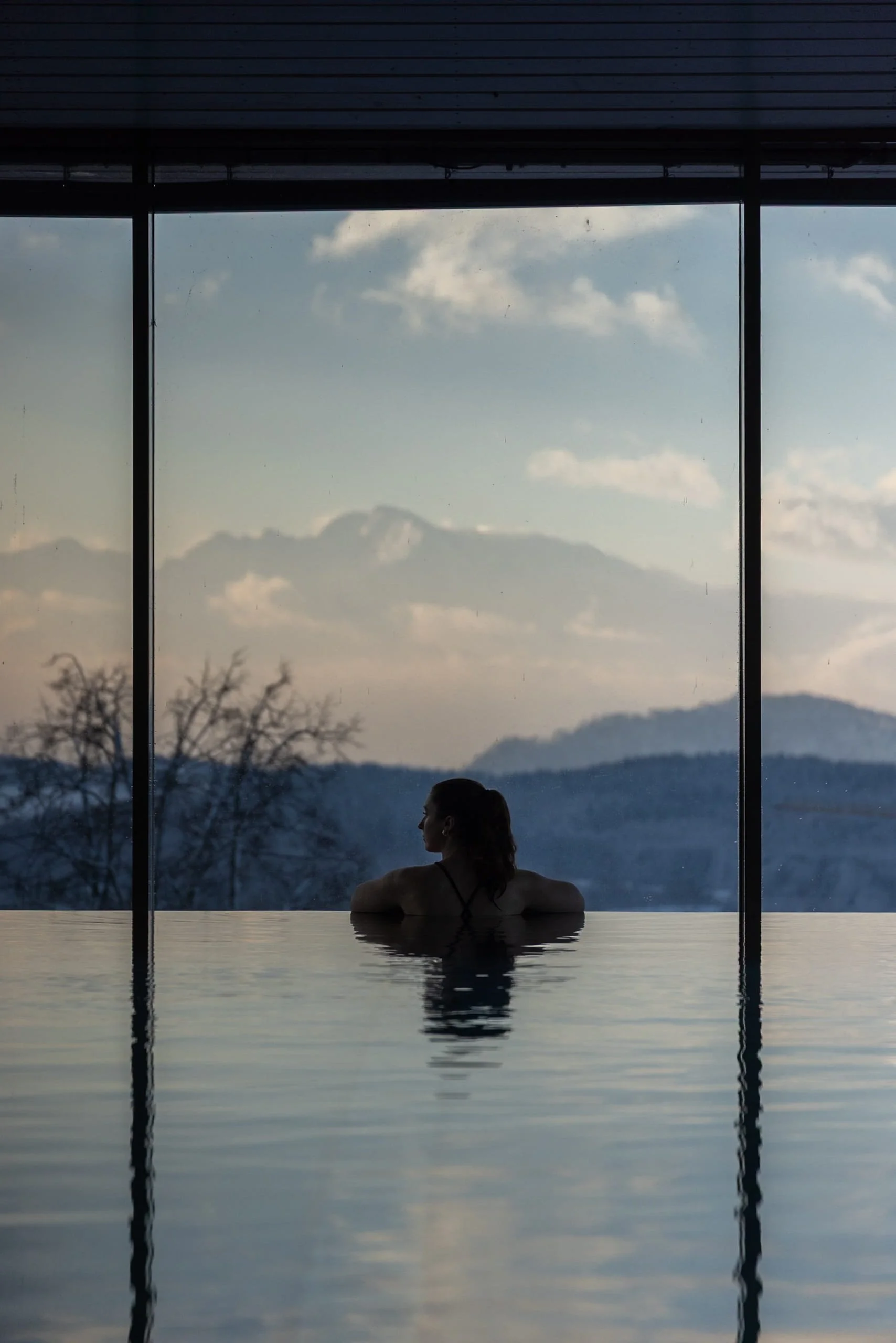
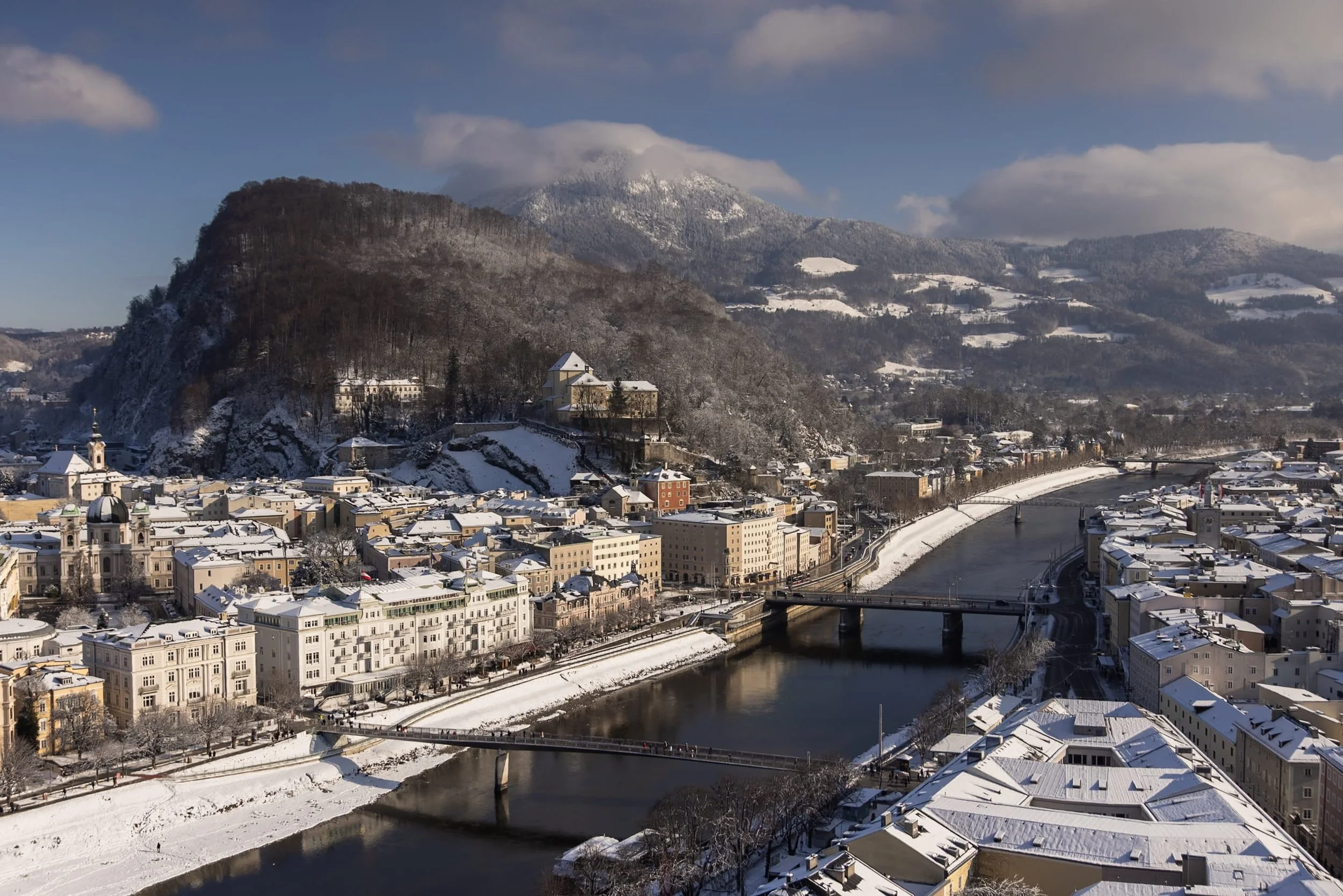
For our first full day in Austria, we explored picturesque Salzburg. We took the 120 bus into the city centre, hopping off near Mirabellplatz, and walked along the Salzach River, with rooftops dusted in snow.
Winter in Salzburg can be very cold due to its location near the northern edge of the Alps. Temperatures dropped to -7°C during the day, and the clear skies made it feel even colder.
Salzburg is the birthplace of Mozart and a key filming location for the movie The Sound of Music. Highlights include the Marko-Feingold-Steg bridge, a pedestrian-only covered bridge with great views of the old town, and Café Tomaselli, one of the city’s oldest cafés, perfect for hot chocolate and a selection of tempting cakes.
For panoramic views, head to Humboldtterrasse Klausentor via the path along the hill from Maria Himmelfahrt Church. The city’s UNESCO-listed squares, Domplatz, Residenzplatz, Mozartplatz, and Kapitelplatz, are all centred around Salzburg Cathedral. Don’t miss the golden Kugel statue and try a Mozartkugel, a marzipan and chocolate treat.
Stroll past pastel-coloured buildings, baroque churches, and Mirabell Gardens, then explore Getreidegasse with its shops, cafés, and cobbled streets. For a local lunch, go to Balkan Grill Walter, hidden just off Getreidegasse and try their famous Bosna sausage sandwich.
In the evening, we returned to the Elixhausen Wirt Hotel and warmed up in the spa. As the hotel restaurant was closed on Sundays, they offered dinner at the nearby FELIX restaurant, a cosy Italian spot serving Pizza and Pasta and generous portions of tiramisu.
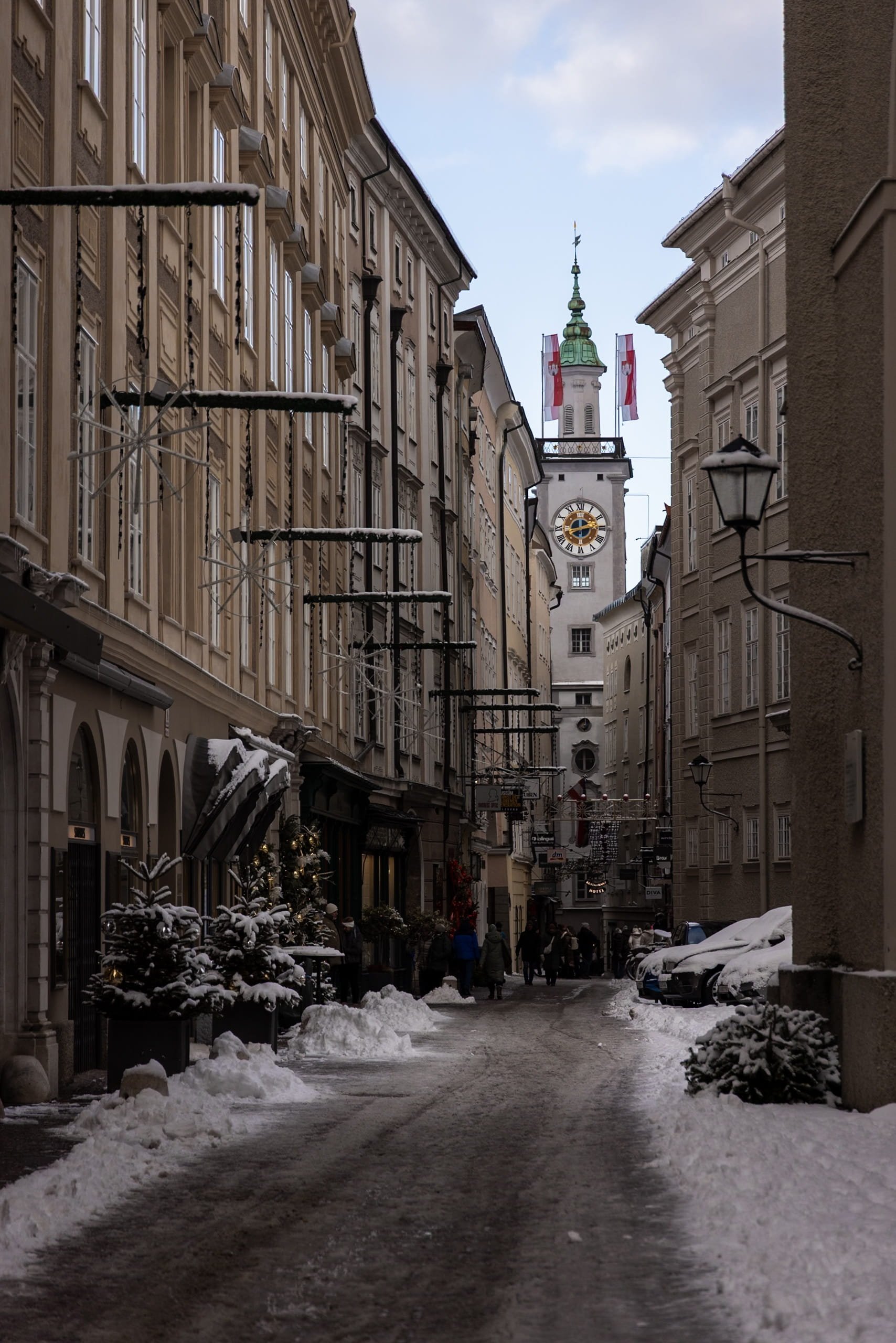
After a delicious breakfast at Elixhauser Wirt, we took the train from Salzburg Central Station to Kitzbühel, changing at Wörgl Hauptbahnhof. The journey was scenic and stress-free, taking around 1.5 hours in total, with plenty of space for our luggage. Trains also offer free WiFi and a food trolley, making the trip even more comfortable.
Once in Kitzbühel, we checked into Eggerwirt, a traditional family-run hotel in the heart of the town, within walking distance of the main high street. We were kindly upgraded to a junior suite, a very spacious room with a private balcony and a large bathroom.
For lunch, we visited Metzgerei Huber, a local butcher serving the village for over 200 years. They offer a daily set menu of comforting, traditional Tyrolean dishes. There is no booking system, you simply walk in and often share a table with others, which adds to the experience.
We spent the afternoon exploring the charming town centre, full of colourful, painted buildings, boutique shops, and cafés. Compared to larger ski resorts, the après-ski scene here feels more relaxed and refined.
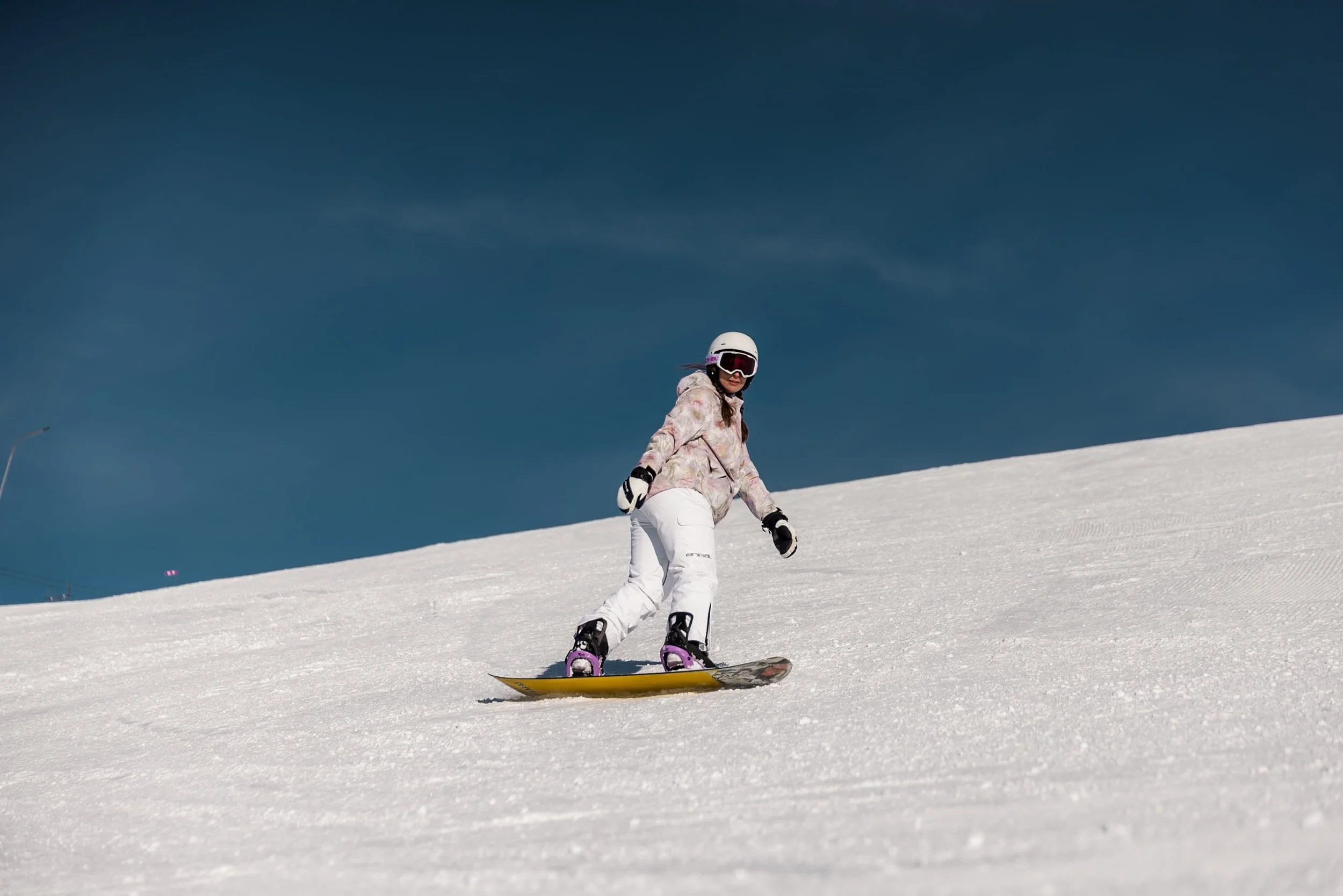
To save time the next morning, we picked up our snowboard rental gear from Intersport at the Hahnenkammbahn, avoiding the morning queues. It was our first time using click-in bindings, which were an absolute game-changer. The staff were incredibly friendly, and the shop has large ski lockers, making it easy to leave your gear for pickup the next day.
Once all our logistics were sorted, we enjoyed one of our favourite non-ski activities in Kitzbühel: a walk around Schwarzsee Lake, which was completely frozen when we visited. You can even walk over the lake or ice skate. The walk from town takes around 20–30 minutes to get to the lake, or you can catch a short bus or train if you prefer.
That evening, we returned to eat at the Eggerwirt Hotel restaurant and were really impressed with the service and food. We would highly recommend the food, it was homemade and just what you needed after a day exploring.
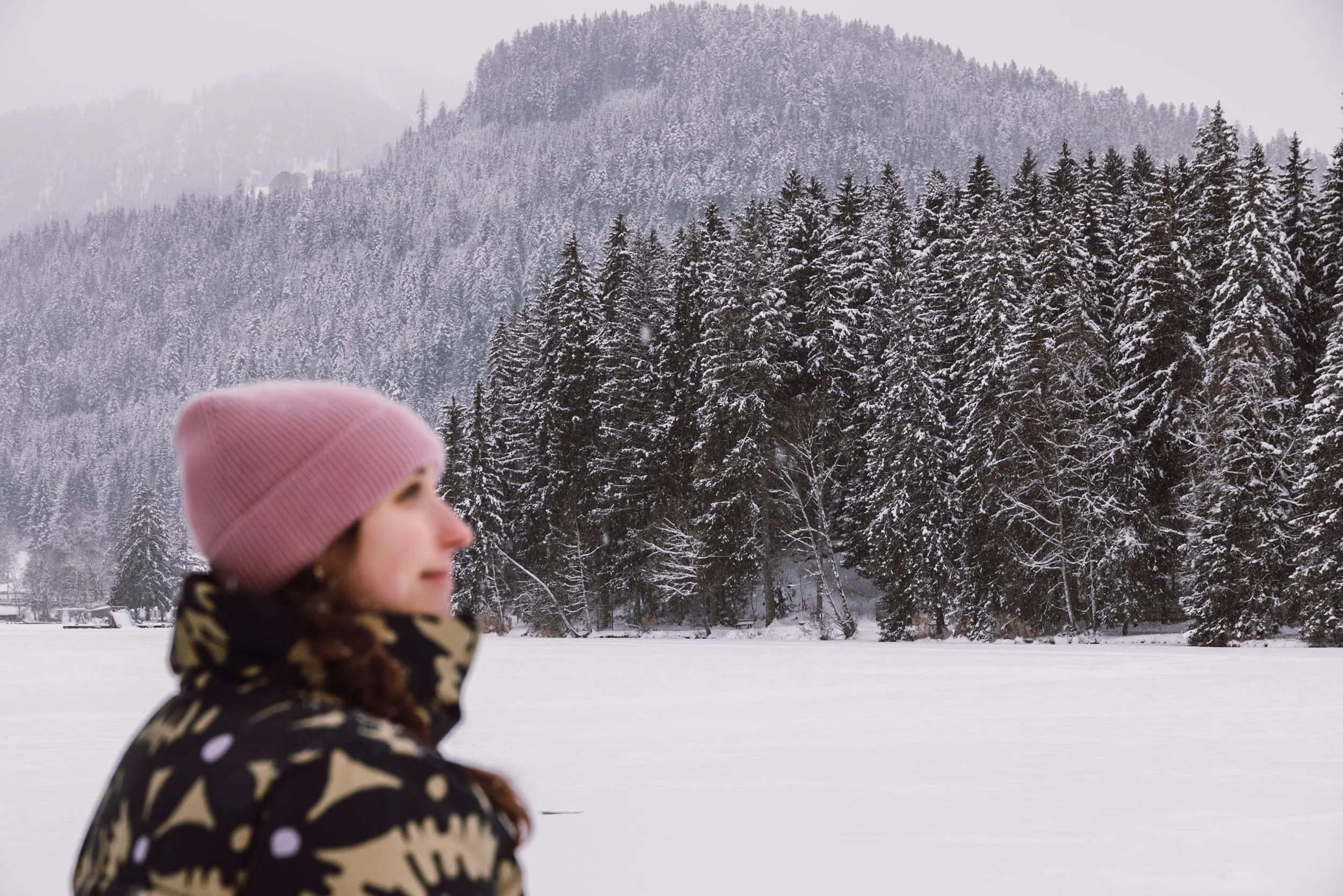
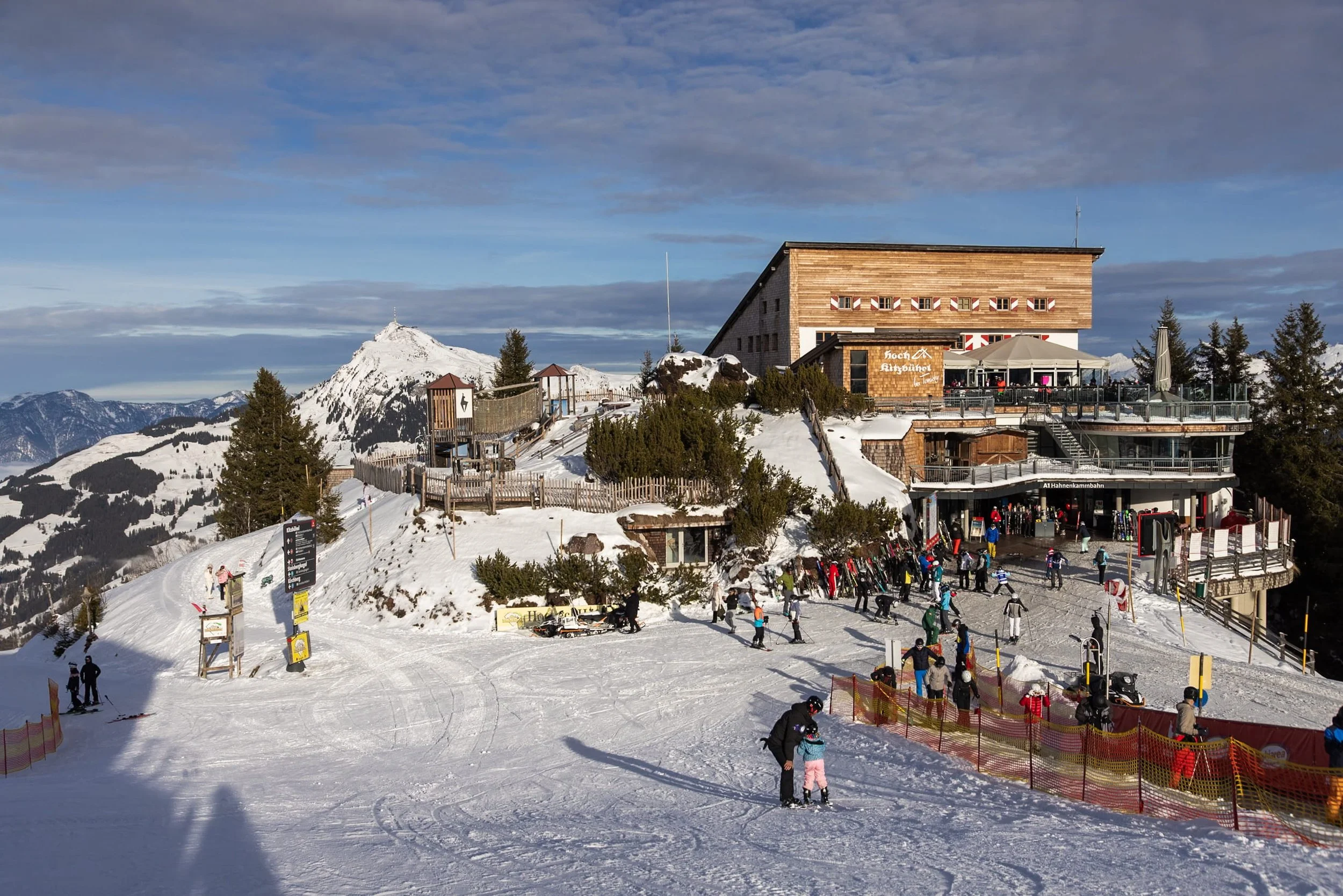
On our first day of snowboarding in Kitzbühel, we got up early and took the Hahnenkammbahn lift to 1,668 m. From the top, you’re immediately rewarded with panoramic mountain views. Don’t miss the Kitz Panorama viewing platform, which offers sweeping vistas from the Wilder Kaiser to the Kitzbühler Horn and the Hohe Tauern.
At the top, you’ll also find the start of the legendary Streif racetrack, considered one of the most dangerous downhill ski races in the world. The annual Hahnenkamm races are hosted in Kitzbühel. This course is only for professional racers, but adventurous skiers can try the red run, which follows part of the track and is challenging in places.
Kitzbühel is best suited to intermediate skiers, with a fantastic mix of blue and red runs. Route 37 down to the B5 chairlift, taking route 36 as an easy loop to quickly get your bearings. It passes the picturesque Speichersee Ehrenbachhöhe lake and a lovely little church. The area feels calm and spacious, with relaxed skiers and excellent mountain huts.
We stopped for lunch at Berghaus Tiroler, a sun-soaked hut serving classic Tyrolean dishes with incredible views. Skiing in Kitzbühel is best for intermediate skiers. Head over to the Pengelstein for endless reds and blues, which also connects you to the Resterhöhe area by the impressive 3S Bahn to a quieter ski area, and to be honest, we were surprised how quiet the slopes felt.
Kitzbühel is home to the national centre for curling in Austria, located at the Sportpark. We had a fantastic session, learning about the history of curling and techniques such as sweeping and delivering the stone. It quickly became clear that curling is much harder than it looks!
That evening, we dined at Neuwirt, which serves traditional Tyrolean dishes with a modern twist. Everything we tried was simply delicious. We’d highly recommend the tuna tartare, chicken schnitzel, and steak, and we really enjoyed the warm atmosphere and friendly staff.
In the morning, we joined a guided snowshoe walk, which runs every Wednesday. It’s a lovely way to experience the mountains at a slower pace, taking in the scenery step by step. Our route looped around the Hahnenkamm area, offering peaceful trails and beautiful views.
We then headed back into Kitzbühel for lunch at Das Reisch, a stylish bar serving comforting favourites with a modern take on Austrian classics.
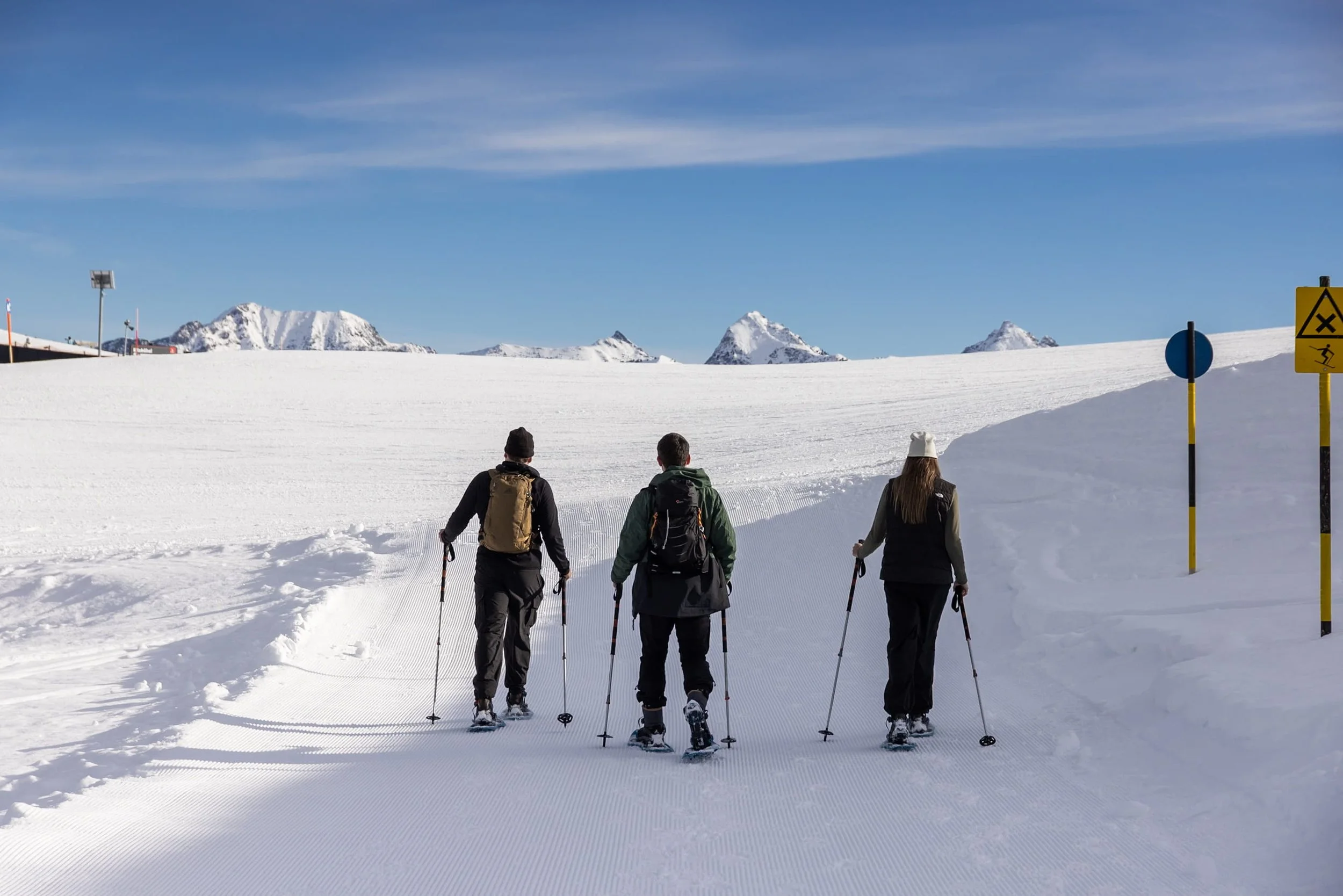
After lunch, we caught a direct train from Kitzbühel to Zell am See, taking just over an hour. The bus station is directly opposite the train station, making onward travel easy. We stayed in Kaprun, around 15 minutes from Zell am See, with direct access on the 660 bus, getting off at Tauern Spa, our stop for the next few nights.
Zell am See felt noticeably livelier and more family-friendly than Kitzbühel. It’s known for its lakeside setting, surrounding mountains, and nearby glacier, giving it a classic Alpine feel.
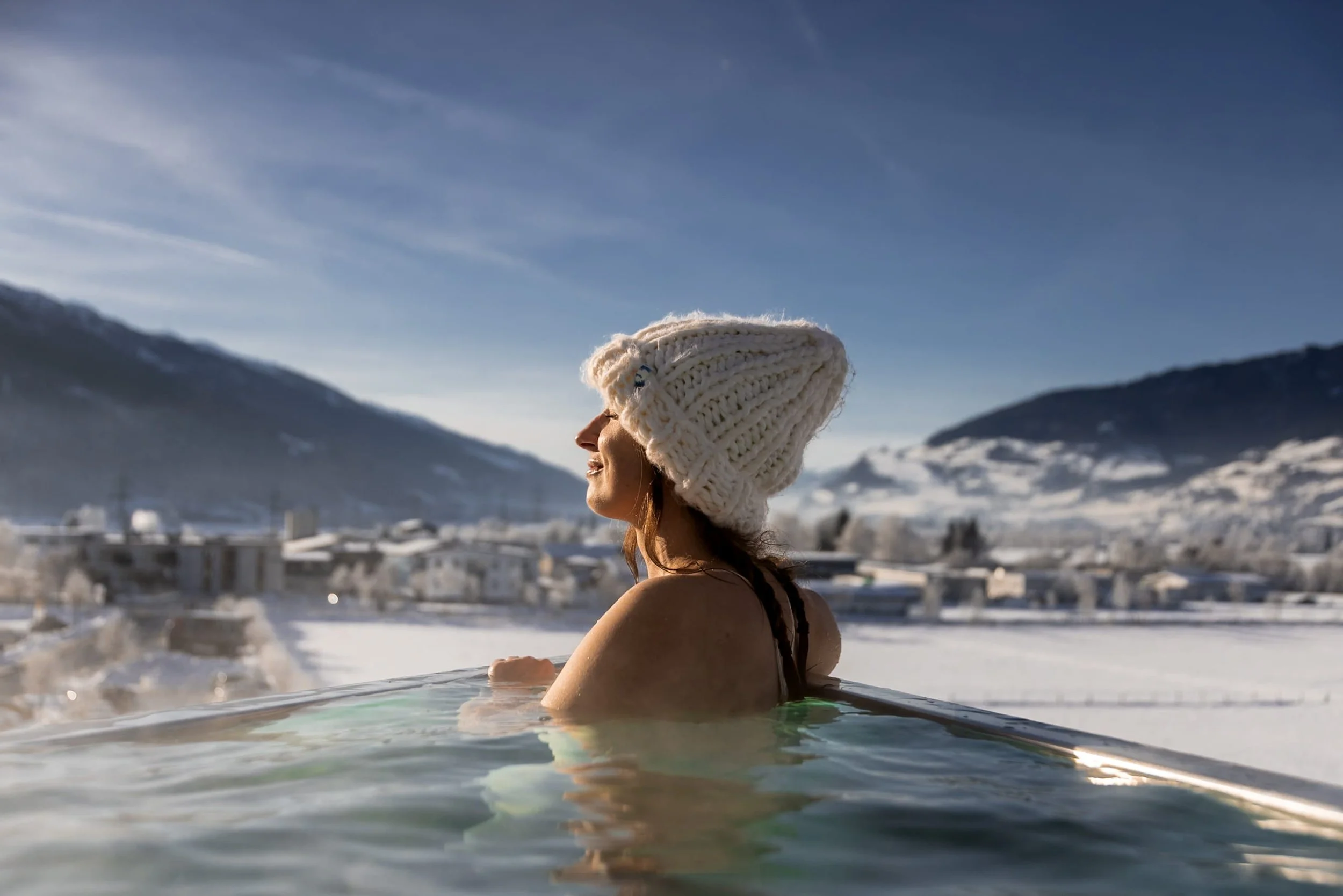
After checking into Tauern Spa Hotel, we spent the afternoon unwinding in the spa, the perfect way to relax, ready for a day of skiing tomorrow. The spa includes indoor and outdoor pools, saunas, steam rooms, a gym, and a bar, all with mountain views.
Hotel guests also have access to the exclusive Sky Pool and adults-only spa area, featuring panoramic sauna rooms, loungers, and an indoor pool. There is also a family-friendly mountain-view pool available.
We stayed in a Double Room Nature Plus, one of the more modern rooms. The room was spacious and comfortable, with a luxury bathroom, plenty of storage, a minibar, and a private balcony. Robes and slippers are provided for your stay.
For those choosing half board, dinner is served as a large buffet with freshly prepared dishes, along with the option to order from a menu. The menu changes throughout the week, and we were impressed by both the quality and variety of the food.
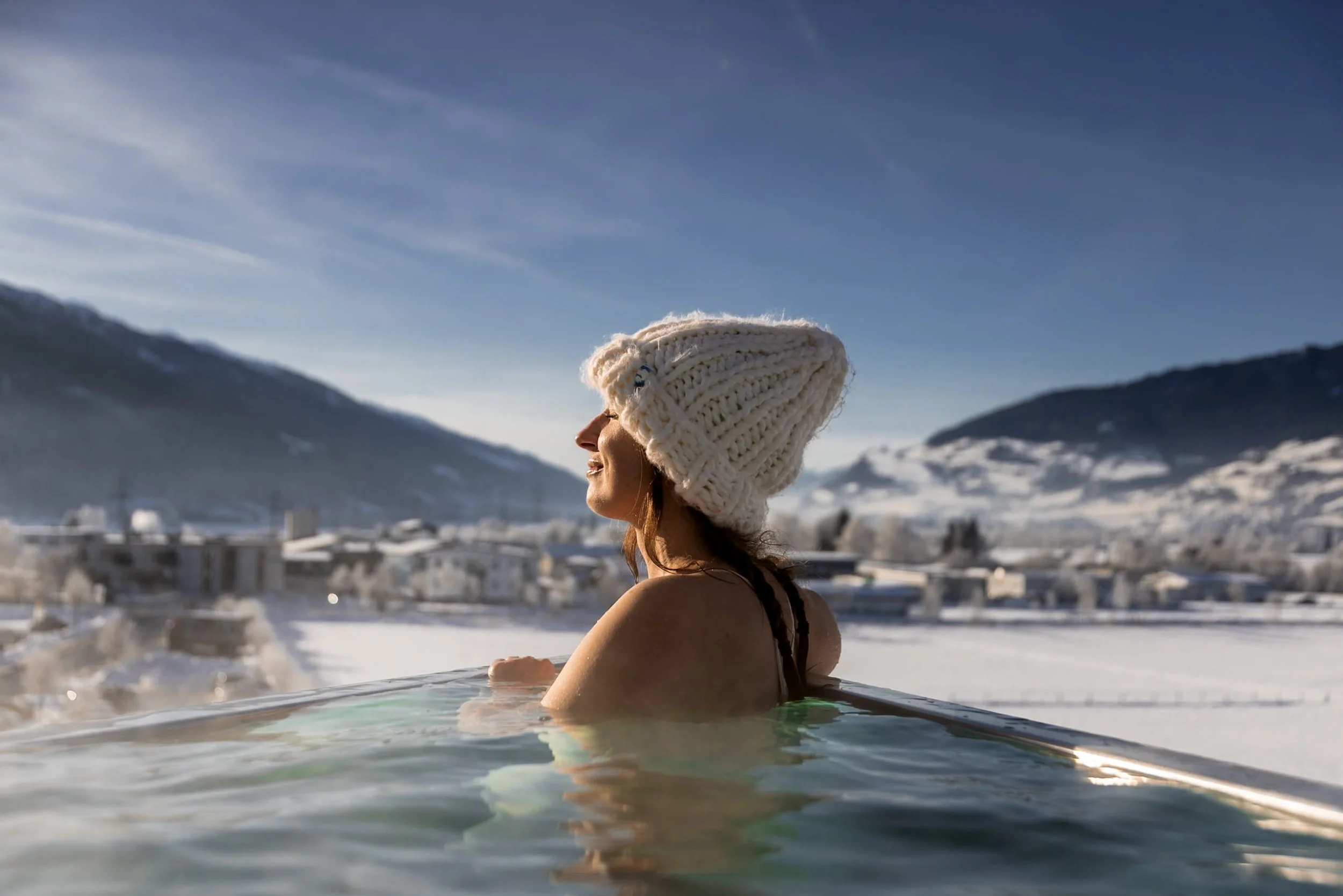
We started early to beat the morning rush, taking the bus to AreitXpress ski lift and picking up our snowboards from Bründl Sports at the Maiskogelbahn station. From here, there are a series of lifts up to the Schmittenhöhe summit at around 2,000m.
Zell am See offers wide pistes, excellent tree skiing, and stunning views over the lake. The resort feels very accessible and inclusive, with beginners’ areas and adaptive skiing well supported. It’s especially popular with families, and is renowned for its black run Trass, a challenging 4km descent.
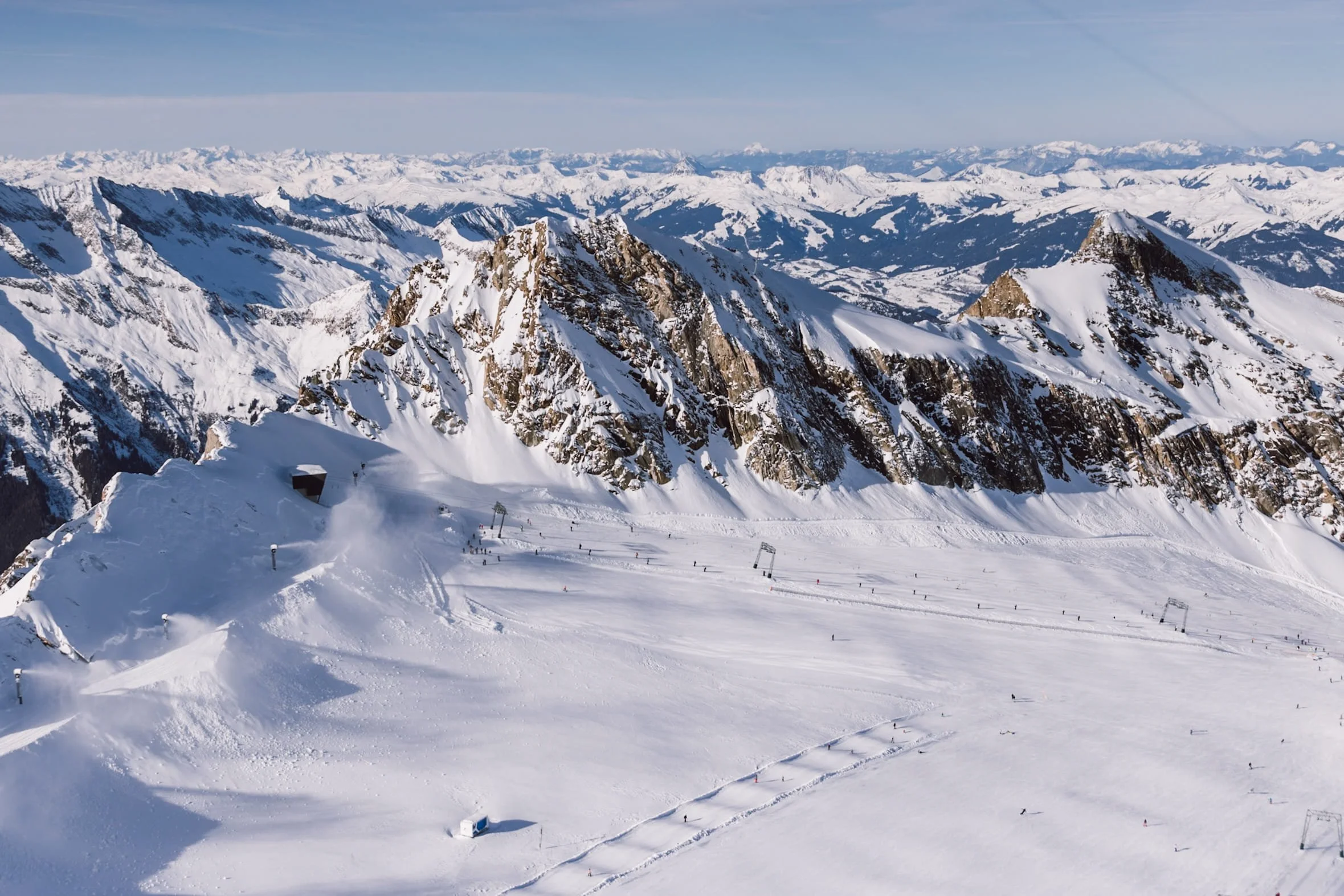
For something truly special, head over to the Kitzsteinhorn, Kaprun’s glacier area and make the journey to the Top of Salzburg. This involves multiple cable cars, including the impressive 3K K-onnection, so allow plenty of time to get to the top.
At the top, the views are exceptional. On clear days, you can see the Zell am See lake far below. We highly recommend skiing down from here, choosing between red and blue runs that are wide, scenic, and beautifully maintained.
Lunch at Gletschermühle was one of our favourites of the entire trip. Floor-to-ceiling windows, excellent food, and sweeping mountain views make it well worth a stop.
That afternoon, we returned to the Tauern Spa to ease tired muscles after a day of glacier skiing. As the clouds lifted, we were rewarded with stunning mountain views.
After a final relaxed breakfast, we took public transport back to Salzburg, using the Guest Mobility Ticket, which covers all travel on your departure day for free. We had issues using the app, but the hotel kindly printed our ticket for us.
If you have time before your flight, this is a great opportunity for any last-minute sightseeing, souvenir shopping, or simply enjoying a final coffee in the old town before heading to the airport.
We stayed one more night before flying home and stayed at the Elixhausen Wirt hotel. We highly recommend opting for half board. The four-course dinner was perfectly portioned, full of flavour, and made with fresh, local ingredients, perfect after a day of travel.
Read our Ski Guides
France
Les Balcons Platinum Residence | Ski-in Ski-out Apartments
Val Thorens | Europe’s Highest Ski Resort Guide
Val Thorens | Christmas & Winter Magic
VoulezVous Hotel | Tignes Stay & Ski Guide
Les Menuires Ski Resort Guide
Les Menuires Best Places to Stay for Ski
Megève | Elegant Ski Resort in the French Alps
Megève | 48-Hour Winter Weekend Escape
Monts Jura Ski Guide | Winter Adventures in Pays de Gex
Austria
St Anton Ski Resort | Off-Piste & Powder Paradise
Ischgl | Complete Ski Guide
Ischgl | Best Hotels & Chalets for Every Budget
7 Day Ski Itinerary in Austria