
This post may contain affiliate links, which means if you purchase through these links, we may receive a small commission at no cost to you. Thank you for supporting our website.
In Partnership with Visit Azores. All opinions are our own.
An enchanting archipelago of nine islands, the Azores is a lush, tropical volcanic paradise perched in the middle of the North Atlantic Ocean along the Mid-Atlantic Ridge; some might even call it “the middle of nowhere.”
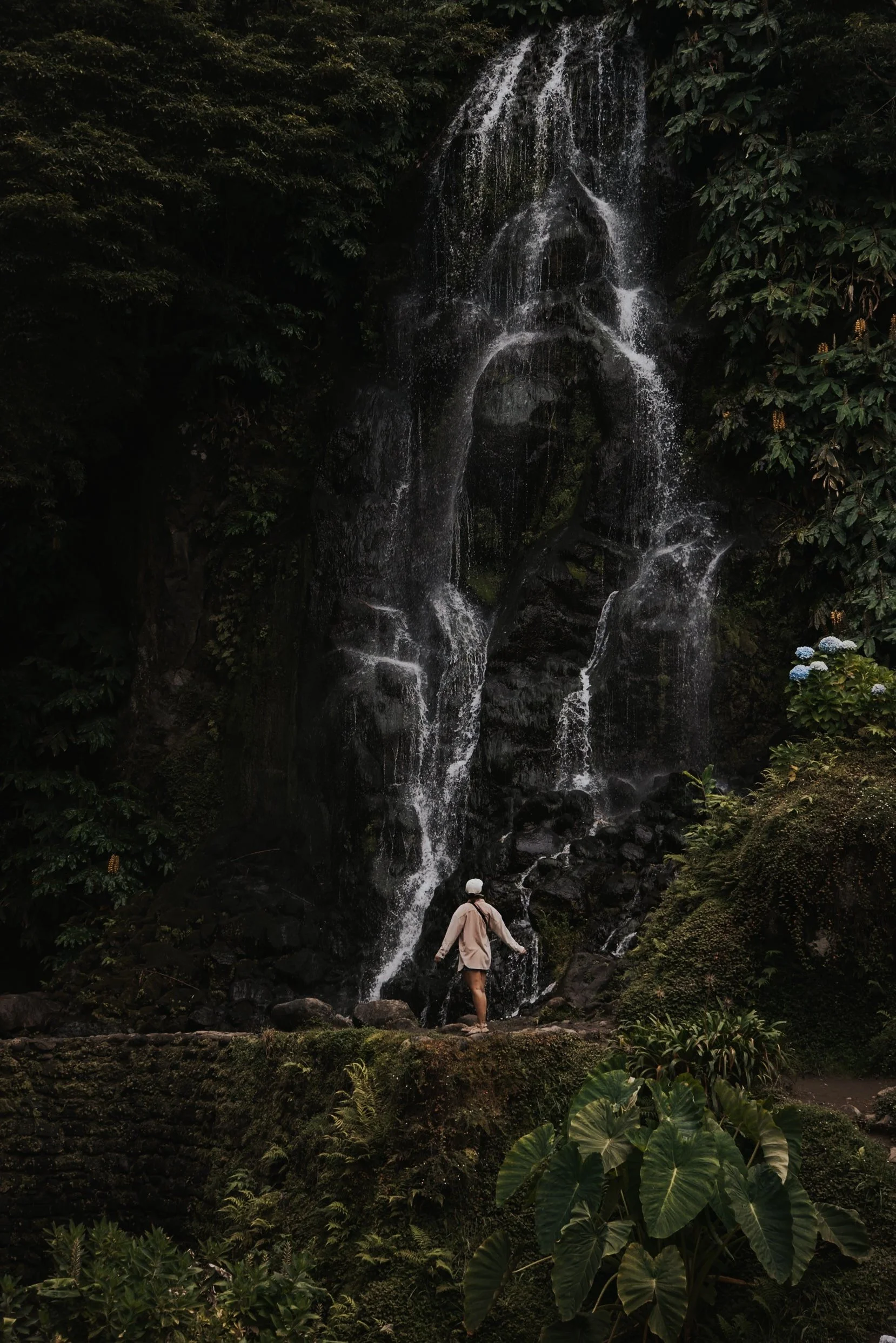
São Miguel, the largest of these islands, is a land of contrasts and adventure. Here, untamed wilderness meets vibrant landscapes, creating a playground for hikers, bikers, and nature lovers. Volcanic craters, rugged coastal cliffs, black sand beaches, steaming thermal pools, hidden waterfalls, and abundant wildlife make it one of the rare places in the world where raw natural beauty feels completely untouched and utterly magical.
In this travel guide, you’ll find practical travel advice, the best and most unique activities and experiences on São Miguel. From tasting local flavours to tips for exciting adventures. We also answer the most common questions to help you plan your trip and make the most of your time on São Miguel.
If you’re planning a longer trip, check out our 7 Day Azores Itinerary and Flores Island Guide, or everything you need to know before visiting the Azores in September.
How to Use This Guide
Jump to any section using the Contents table below. Click a heading in the guide to pop back to the contents and explore other sections.
São Miguel is the largest island in the Azores, an archipelago of nine volcanic islands in the North Atlantic Ocean, roughly halfway between Europe and North America. Known as “The Green Island,” it is the main gateway to the Azores and is celebrated for its dramatic landscapes, volcanic crater lakes, hot springs, waterfalls, and diverse wildlife.
Map of São Miguel
Best Things to do on São Miguel
São Miguel is a haven for marine and coastal wildlife, offering unforgettable encounters with whales, dolphins, sea turtles, and seabirds. The island’s abundant waters and protected coastal areas create a perfect environment for these species, making it one of the best places in the world for ethical wildlife observation.
Whale and dolphin watching
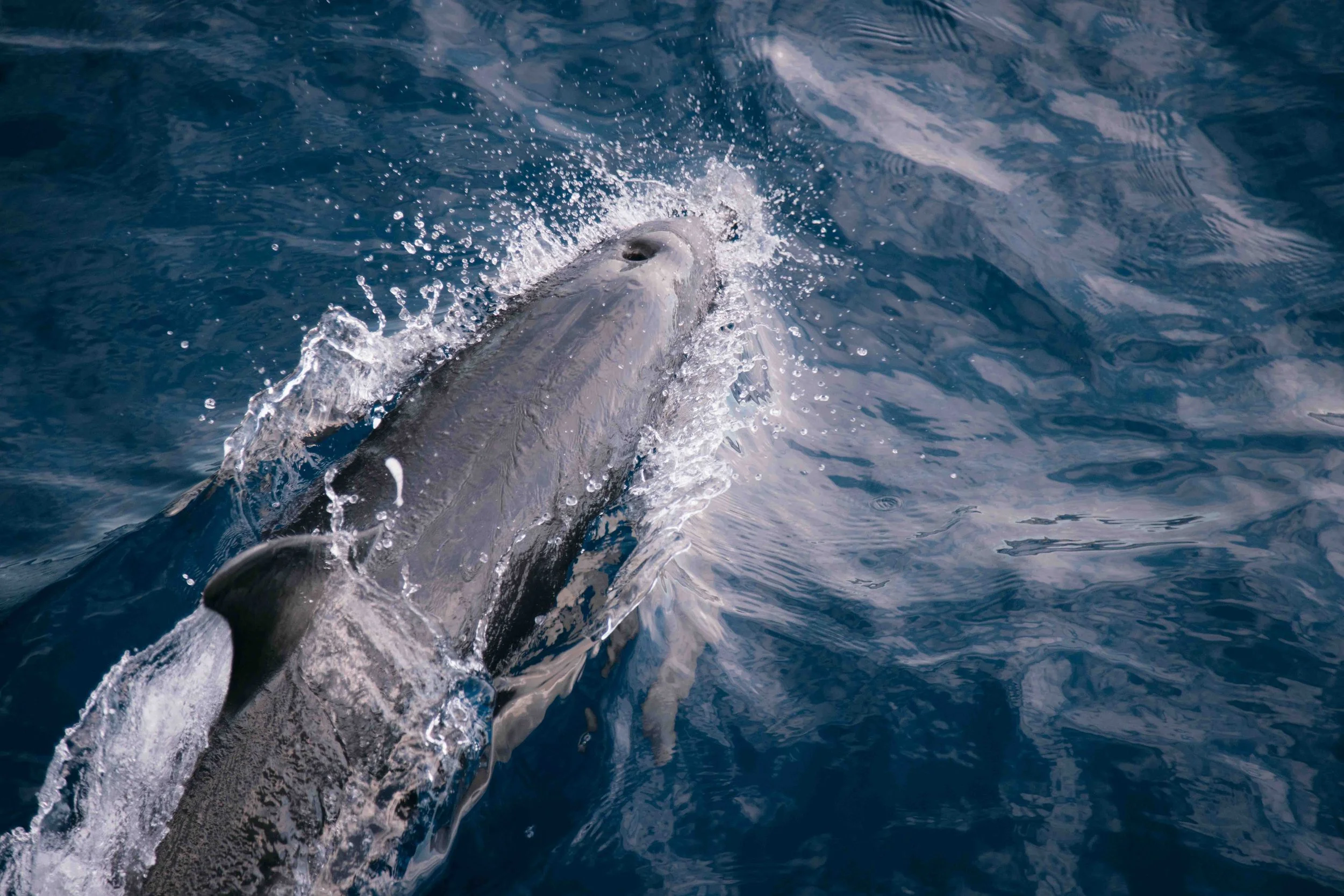
The Azores is one of the best places in the world to observe whales and dolphins year-round, and it leads the way in sustainable wildlife tourism. On our trip with Futurismo Azores Adventures, they follow strict, responsible‑tourism guidelines certified by the World Cetacean Alliance, ensuring your wildlife encounter is both ethical and respectful. A marine biologist shared fascinating insights about each species we encountered.
Our first sighting was common dolphins swimming right up to the boat, curious and playful. Further out at sea, we discovered a family of four sperm whales, their blowholes breaking the ocean surface. On the return journey, a large group of bottlenose dolphins leapt alongside the boat, full of energy and curiosity.
Futurismo maintains strict conservation practices, keeping respectful distances and limiting time with the animals. Sperm whales are resident year-round, while dolphins and other species are most commonly seen from April through October. For a more immersive experience, it’s even possible to swim with dolphins in designated areas.
They also offer a cetacean sighting guarantee: if you don’t spot any whales or dolphins during your tour, you can reschedule another trip for free.
Snorkelling
A highlight of visiting São Miguel’s southern coast is the Vila Franca do Campo islet, a protected marine reserve formed from a submerged volcano. Its perfectly circular crater bay is ideal for swimming, snorkelling, and kayaking, with waters full of colourful fish, small rays, and vibrant marine plants.
Guided boat tours and kayak excursions allow you to explore all the best swimming and snorkelling spots around the islet. Some tours also combine this with dolphin watching, giving you a full marine wildlife experience. Lucky visitors may even spot loggerhead sea turtles gliding through the clear waters, adding a magical touch to the adventure.
The islet’s dramatic cliffs have even hosted the Red Bull Cliff Diving World Championship, providing an exhilarating backdrop to your day in the water.
Birdwatching
São Miguel is a sanctuary for seabirds and endemic species, making it a must-visit for bird enthusiasts. The island is home to several endemic species, including the Azores Bullfinch (Pyrrhula murina), which is only found in the eastern forests of São Miguel.
One of the best ways to see marine birds is on a guided boat tour to Vila Franca do Campo islet, a protected nature reserve just off the coast. Accompanied by experienced birdwatchers, you’ll learn about the different species, their migration routes, and behaviour, while observing them safely from the boat. Some tours also highlight nesting seabirds on the islet, offering a rare glimpse of chicks and breeding colonies in action.
Seabird activity peaks in spring and autumn, during migration, but many species are visible year-round. These islands serve as an essential refuge for breeding and raising chicks, providing a rewarding experience.
São Miguel is home to a variety of stunning beaches and unique swimming spots, from volcanic black sand shores to geothermal tidal pools. Whether you want to relax on the sand, take a dip in naturally heated waters, or explore hidden coves, the island offers something for every type of beachgoer.
Ponta da Ferreria
A truly unique experience on São Miguel is swimming in the geothermal sea pool at Ponta da Ferraria. Here, the Atlantic Ocean meets volcanic hot springs, creating a natural sea hot tub with water that warms gradually as you approach the rocks. This natural phenomenon is surrounded by rugged coastal scenery and the relaxing sound of waves.
Make sure to bring water shoes or sturdy sandals, as the volcanic rocks can be sharp. Whether you relax in the warmer areas or venture out into the cooler ocean currents, it’s an unforgettable way to enjoy São Miguel’s volcanic magic.
Mosteiros Beach
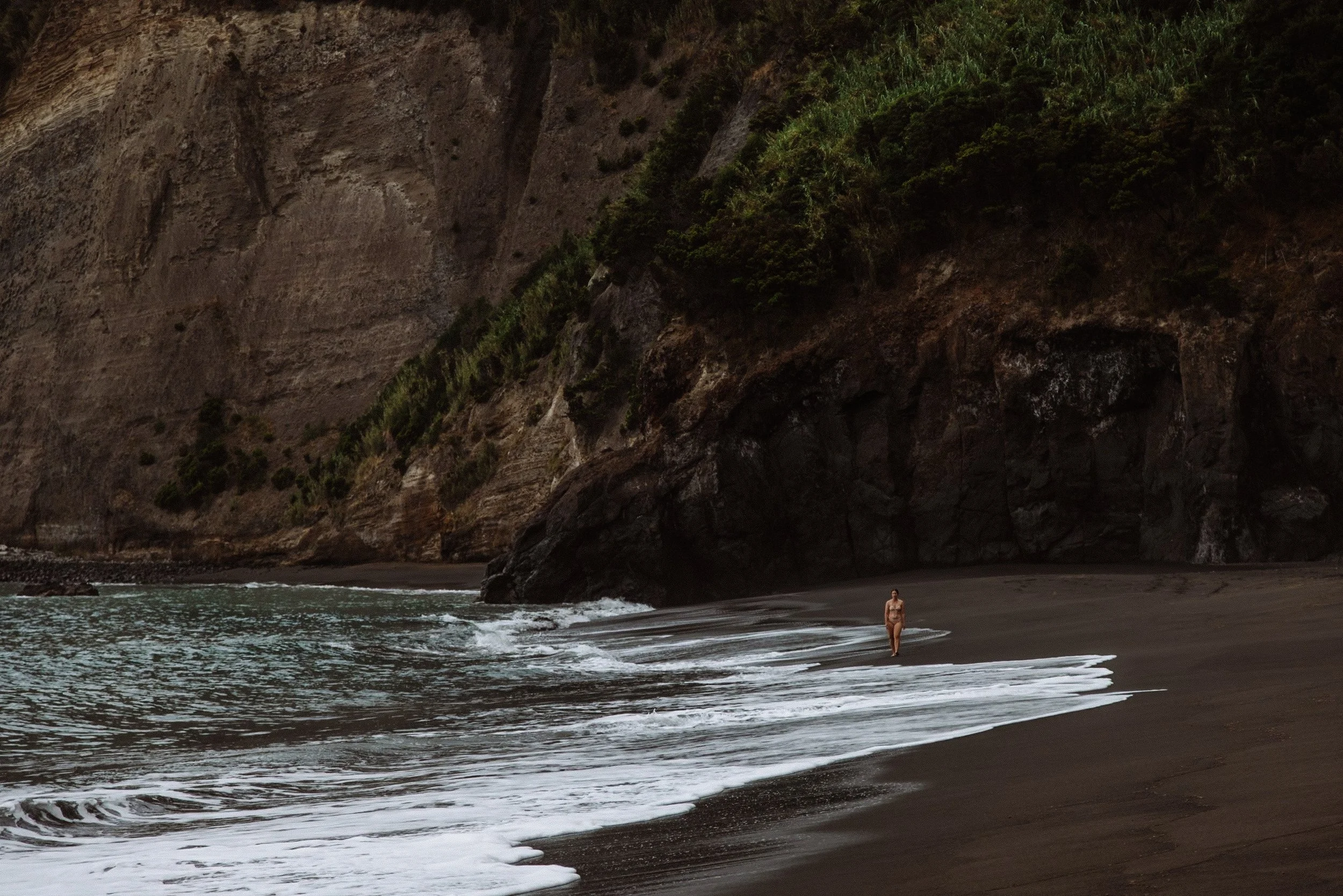
São Miguel is dotted with stunning black sand beaches thanks to its volcanic origins. Mosteiros Beach is an excellent example, featuring dramatic black sand and jagged lava rock formations that rise from the shoreline, contrasting beautifully with the deep blue Atlantic.
At low tide, explore tidal pools where marine life hides, making it a mini adventure for nature lovers. Bring sturdy footwear or sandals, as the sand can get very hot and the volcanic rocks are sharp. Whether you’re relaxing, exploring, or taking photos, Mosteiros Beach is a striking reminder of the island’s raw volcanic beauty.
Praia do Fogo
One of our favourite beaches on São Miguel is Praia do Fogo, thanks to its remote feel and adventurous approach. The drive takes you through tunnels blanketed in tropical greenery, with opportunities to stop at waterfalls along the way. It’s ideal to pair with a visit to Furnas Village.
The beach is said to be where geothermal water meets the ocean. In our experience, the water didn’t feel as warm as at Ponta da Ferraria, but digging your feet into the sand revealed a subtle warmth. On a calmer day, this effect is likely even more noticeable, making Praia do Fogo a quiet and scenic beach to visit.
Praia de Santa Bárbara
If you’re chasing surf, sunsets, and that laid-back island atmosphere, Praia de Santa Bárbara on São Miguel’s north coast is the place to be. This long stretch of soft black sand feels wild and open, with powerful waves rolling in and the mountains framing the horizon.
Santa Bárbara is the island’s unofficial surfer’s paradise and home to a brilliant surf centre and beach bar where you can grab a lesson or just sink into a chair with a cold drink. As the sun dips, the whole beach glows; it's one of the best sunset spots on São Miguel.
Follow the shoreline a little further, and you’ll find an eco-resort with its own beautifully designed beach club. It feels tucked away and much more tranquil, perfect for relaxing with fresh food, a cocktail, and the ultimate chilled surf vibe.
The rich, fertile volcanic soils of São Miguel create some of the most unique produce and an incredible variety of traditional Azorean dishes and flavours you have to try on your visit. From meals cooked by volcanic geothermal heat to sweet, golden pineapples unlike any we’ve tasted before.
Cozido das Furnas
Furnas Village is a geothermal hotspot filled with hot springs, fumaroles, and the unmistakable scent of sulphur. It is here that locals harness volcanic heat to cook Cozido das Furnas, a hearty stew of potatoes, meat, and vegetables slow-cooked underground for several hours, giving it a flavour like no other.
You can watch the pots being unearthed at Furnas Lake. Don’t miss also trying Bolo Lêvedo, a fluffy yeast bread perfect for breakfast or a snack.
For lunch, we stopped at Terra Nostra Garden Hotel, a charming spot with art deco vibes and gardens full of hot springs. The cozido was a steaming mix of sweet potato, beef, chicken, and cabbage served in a rich stew sauce and very generous portions!
Gorreana Tea Plantation
Located northwest of Furnas, Gorreana Tea Plantation is the oldest tea estate in Europe, producing green and black tea since 1883. Still family-run and fully organic, the plantation stretches across 32 hectares of rolling fields and is powered entirely by hydroelectricity, making it as sustainable as it is historic.
This was one of the busiest spots we visited on São Miguel, and pulling into the narrow driveway felt a little chaotic as everyone tried to squeeze into parking spaces. But once you’re parked, the experience is well worth it. You can wander through a self-guided tour, exploring the traditional machinery and learning how the tea leaves are processed from harvest to final product.
One of the most fascinating parts is watching workers hand-separate the stems from the leaves, a delicate step that can’t be done by machines. After the tour, stop by the shop to pick up tea to take home, or relax in the café with a cup and a sweet treat while admiring the sweeping views over the plantation.

Boa Fruta Pineapples
One of the sweetest introductions to São Miguel is Boa Fruta, a family-run pineapple plantation in Ponta Delgada showcasing one of the island’s signature flavours. You can explore the grounds on a self-guided tour among rows of glass greenhouses, discovering why each pineapple takes two years to grow.
Pineapples became a key crop after the island’s orange trade declined. The first São Miguel pineapple was successfully grown and exported in 1964, and today Boa Fruta grows its produce organically using a rainwater-harvesting system.
We were shown around by Luís Dâmaso, whose family has been cultivating pineapples for four generations, and his passion for the tradition is infectious. Don’t miss the tasting station where you can try pineapple slices, pineapple beer, jams, and a tropical twist on the classic Portuguese pastel de nata.
If you’re wondering what the best restaurants in São Miguel are, here are some top recommendations for a variety of tastes and experiences.
A Tasca – Traditional tavern in Ponta Delgada serving authentic Azorean dishes. Popular for grilled chorizo and garlic prawns. No reservations, so expect a queue. Friendly staff and a lively atmosphere.
Cais da Sardinha – Waterfront dining at Ponta Delgada marina with fresh seafood and panoramic views. Highlights include garlic prawns, fresh tuna, and Bolos Lêvedos. Outdoor seating is perfect for lunch or a relaxed evening cocktail.
Terra Nostra Garden Hotel Restaurant – Elegant restaurant overlooking the gardens in Furnas village. Famous for Cozido, a hearty stew of beef, chicken, cabbage and sweet potato. Filling and luxurious, a true taste of traditional Azorean cuisine.
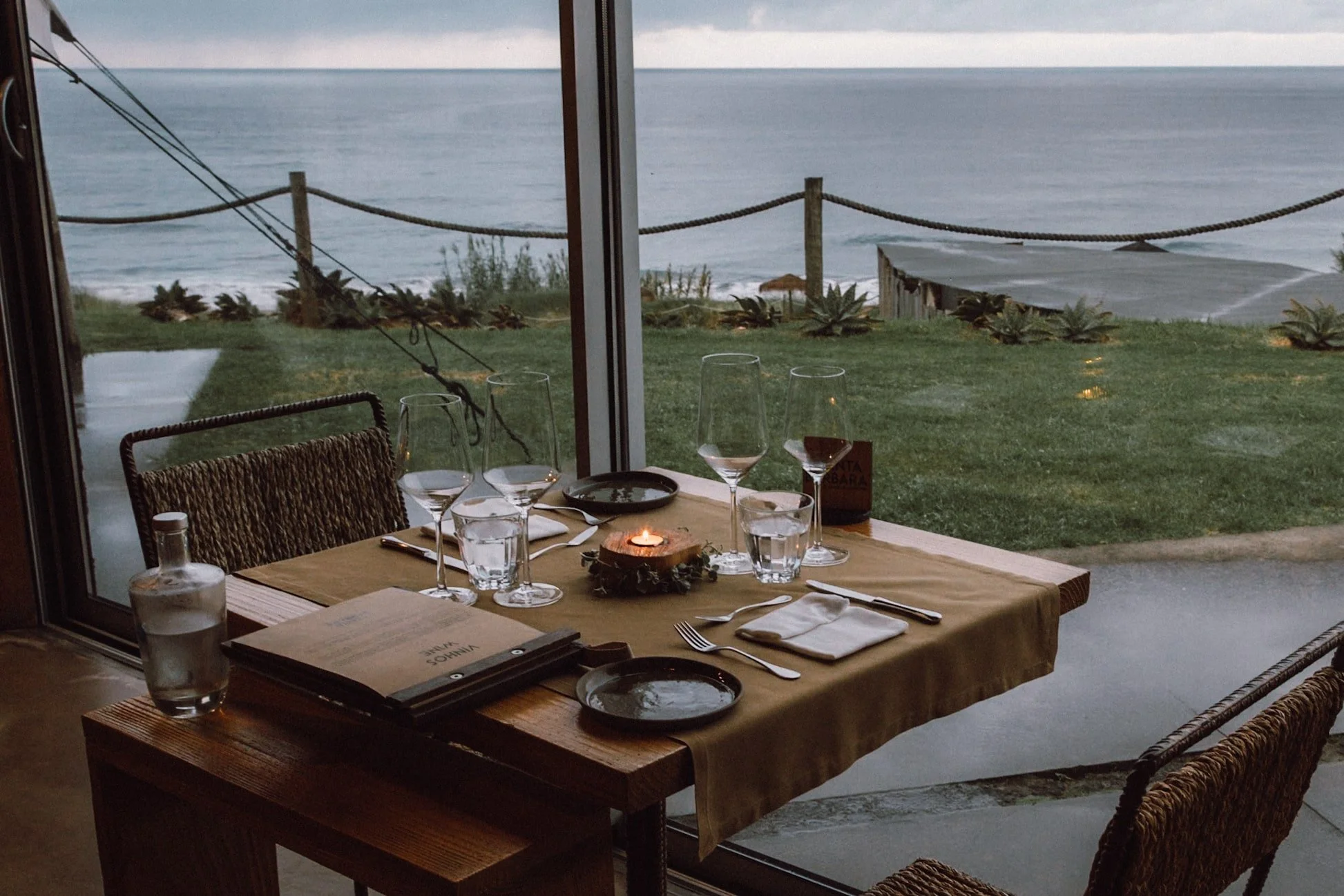
Santa Barbara Eco Beach Restaurant – Beachfront eco-luxe restaurant in Ribeira Grande. Focuses on organic, locally sourced ingredients. Standout dishes: Chateaubriand, passion fruit crème brûlée, and Malassada. Cosy, scenic and intimate.
Magma Restaurant – Modern Azorean cuisine at Senhora da Rosa Hotel in Ponta Delgada. Farm-to-table menu features pork, yams, pineapples, and Pico wines. Indoor and terrace seating, surrounded by serene natural surroundings.
Os Melos – Buffet-style restaurant in Achadinha, just 5 minutes from Ribeira dos Caldeirões waterfall. The food feels like your grandmother’s cooking, with dishes such as lasagne, chicken, beef, salads and chips. Drinks include beers and soft drinks, and there’s a self-serve hot sauce bar. Very popular with locals and groups, so book ahead.

São Miguel is a hiker’s paradise, with trails winding through volcanic craters, lush forests and dramatic cliffs. Each path leads to breathtaking views, hidden lakes and photo-worthy landscapes.
For detailed trail information, including difficulty, distance, estimated time and maps, visit the official Azores Tourism website.
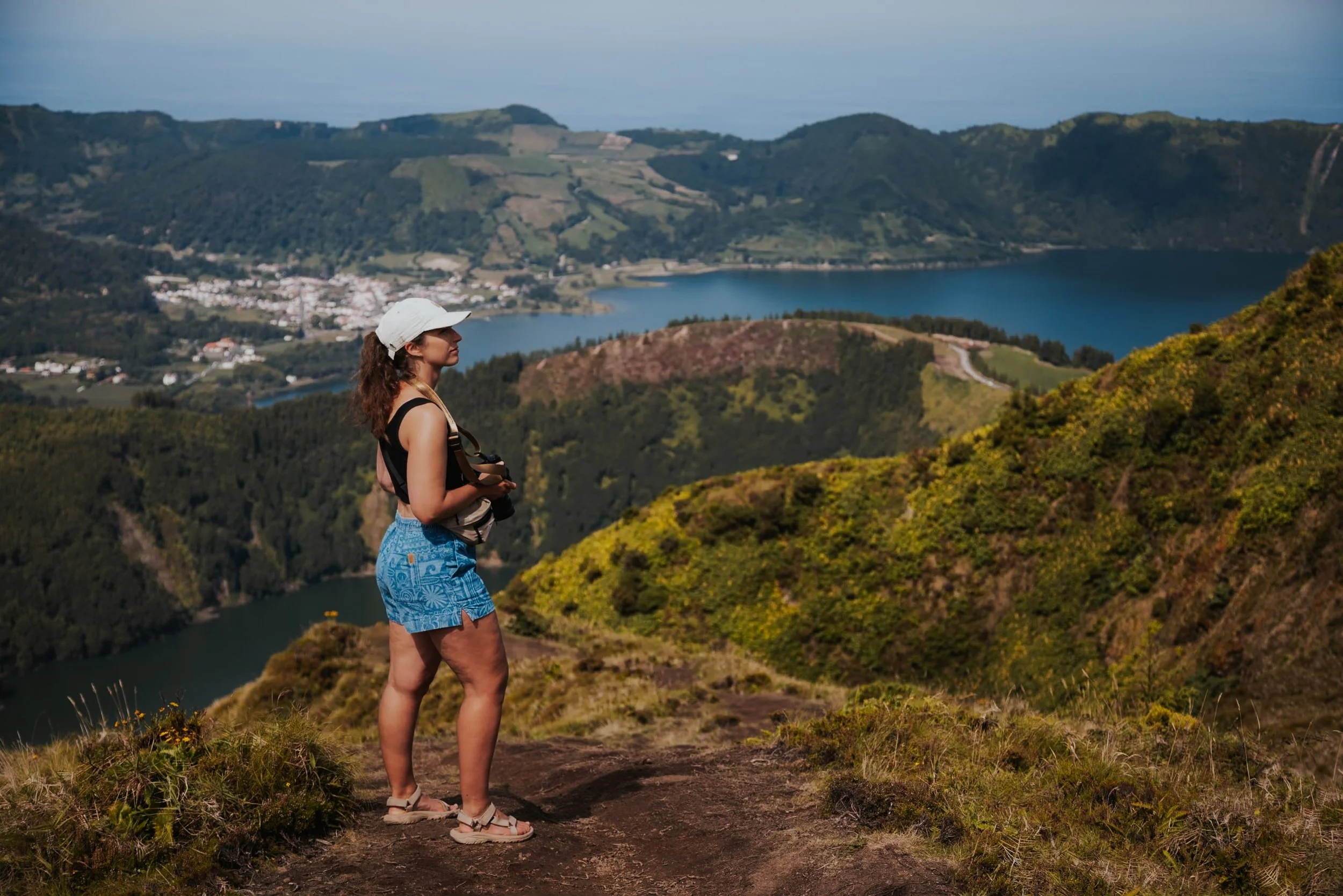
Sete Cidades
No trip to São Miguel is complete without visiting Lagoa Sete Cidades, one of the island’s most famous viewpoints. The path to Miradouro da Greta do Inferno winds through tall pine trees and sub-tropical rainforest, passing above Lagoa do Canário before reaching steps that lead to the main viewpoint.
Crowds can build quickly, especially at midday, so we recommend visiting early morning or late afternoon. For a quieter experience, continue a little past the main viewpoint to enjoy stunning views of the twin lakes without the crowds.
The path can be slippery after rain, and spongy moss makes footing tricky, so wear grippy shoes and keep back from cliff edges. This iconic viewpoint offers a dramatic perspective of the crater lakes and surrounding volcanic landscape, perfect for photos, but remember to stay behind barriers and be respectful of other visitors.
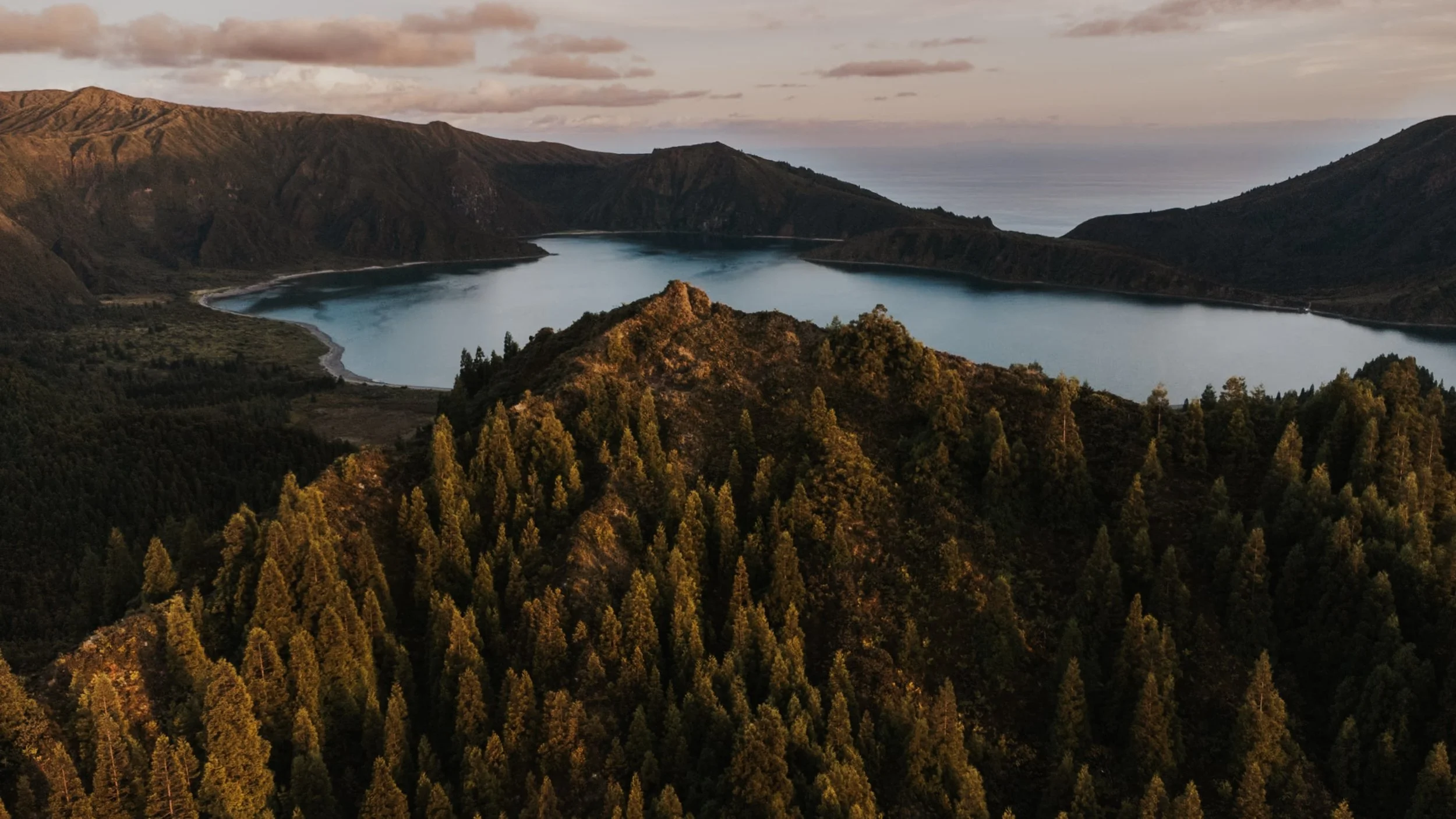
Lagoa do Fogo
One of the best sunset spots on São Miguel is Lagoa do Fogo, a dramatic crater lake set within a protected natural reserve known as the Lake of Fire. The volcano that formed the lake erupted in 1563, and its collapsed caldera created the striking landscape you see today.
For a spectacular sunset, drive up after 7 pm when restrictions on tourist rental cars lift, or use the shuttle bus from Caldeira Velha during the day. Along the winding mountain road, there are several viewpoints where you can stop to admire the scenery. We also loved Miradouro do Pico da Barrosa, which offers breathtaking views of the lake as the sun dips below the horizon.
Be cautious near the edges, as the slopes into the lake are steep. For a more adventurous experience, you can hike from Praia to Lagoa do Fogo, reaching a wild, award-winning beach at the lake’s edge. This trail is challenging, so sturdy hiking shoes and good gear are essential.
Miradouro da Ponta do Sossego
São Miguel is dotted with incredible miradouros, or viewpoints, but one of the most stunning is Miradouro da Ponta do Sossego in the quiet northeast municipality of Nordeste. This peaceful part of the island feels worlds away from the crowds, and we can’t wait to explore more of it on our next visit.
The viewpoint itself offers breathtaking panoramic views, and the surrounding gardens are perfect for a stroll. There are picnic and BBQ areas, making it an ideal spot to stop for lunch or simply relax and soak in the scenery. Sunrise here is magical, with soft light spilling over the cliffs and ocean. Facilities include toilets and a snack truck selling ice cream and treats, so you can enjoy the views comfortably.
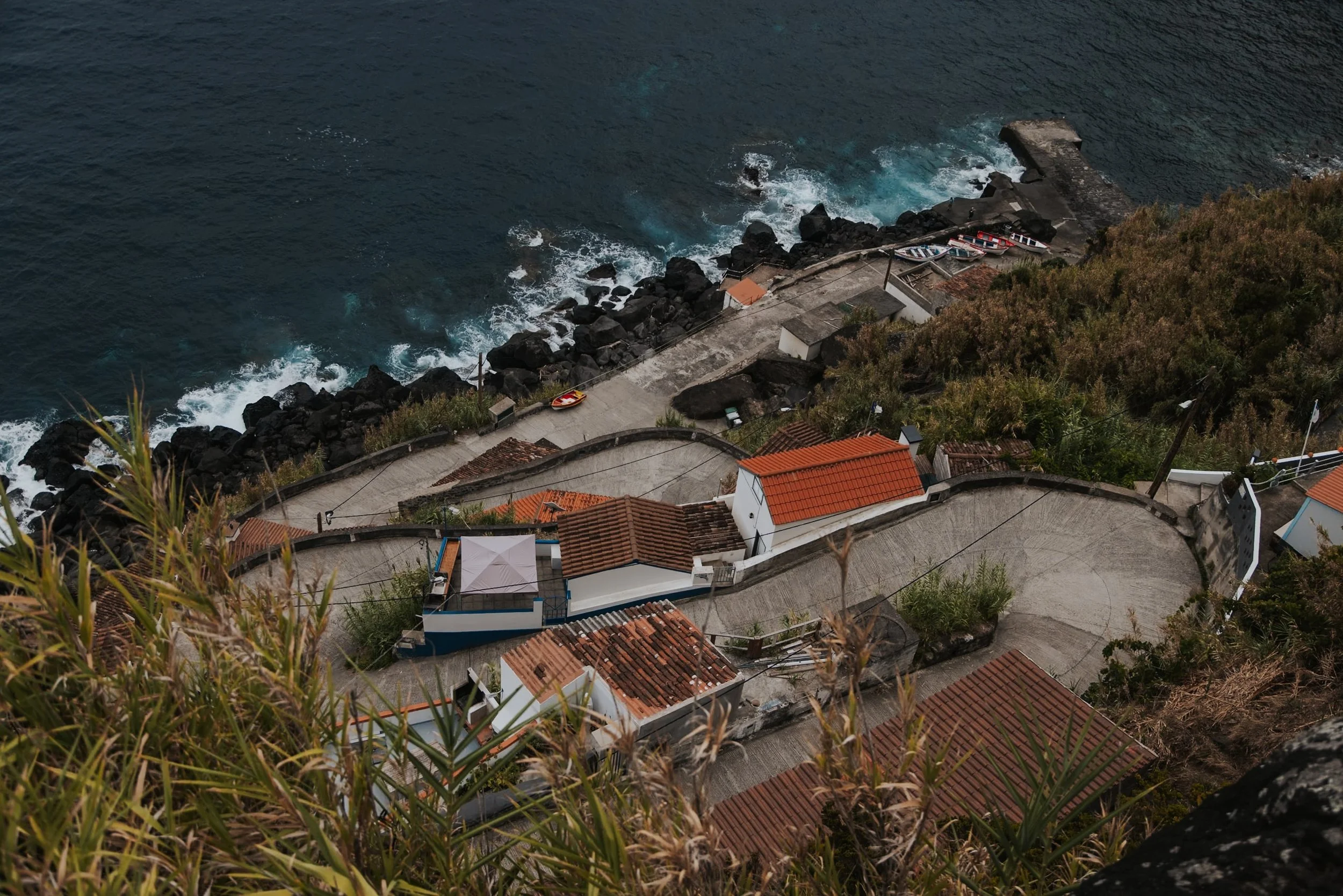
Farol do Arnel
We loved exploring the east coast of São Miguel around Nordeste, a quieter and wilder part of the island where the historic Farol do Arnel lighthouse still guides sailors today. Built in 1876, it is the oldest lighthouse in the Azores, perched dramatically above the Atlantic with panoramic views that feel like the edge of the world.
To reach it, you’ll find a car park at the top with signs advising against driving down the incredibly steep road. We chose to walk, and while the climb back up is calf-burning, the scenery makes it worth every step. Continuing past the lighthouse, the road leads all the way down to an 80-metre waterfall that plunges straight into the ocean, one of the most impressive on the island.
For adrenaline-seekers, São Miguel offers exciting outdoor activities amidst stunning natural landscapes.
Canyoning
São Miguel is a canyoneering paradise, perfect for beginners seeking adventure and stunning scenery. Canyoning is the most exciting way to descend waterfalls by jumping, abseiling, and zip-lining along a river with expert guides.
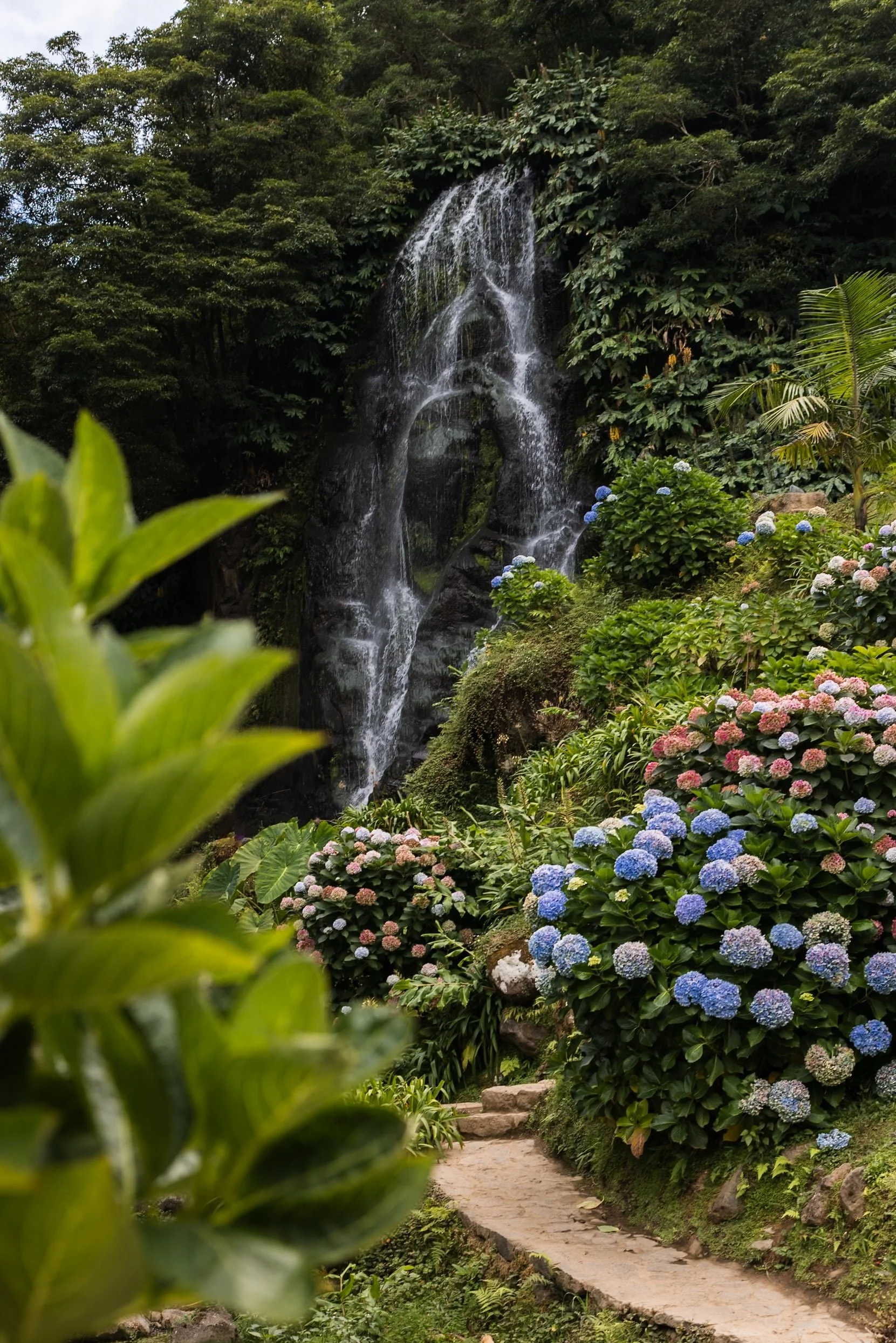
We explored Ribeira dos Caldeirões Natural Park with Picos de Aventura, passing historic watermills and gardens full of vibrant hydrangeas. The course includes jumping into natural pools, abseiling down waterfalls, and zip-lining across the river. Guides provide wetsuits, shoes, helmets, and harnesses.
The route is spectacular. The tropical forest is scented with ginger lilies, and the river pools invite you to float in serenity. Fallen petals lead your way down the river, making it feel magical.
Whether you want an adrenaline rush or a playful splash in nature, canyoning at Ribeira dos Caldeirões is a must-do on São Miguel. The team is supportive and can help if you are nervous about heights.
Kayaking
One of the best ways to explore this protected nature reserve is by kayak, with opportunities to swim and snorkel in the calm, clear waters of the bay. The islet’s dramatic cliffs have even hosted the Red Bull Cliff Diving World Championship, adding an exhilarating backdrop to your adventure.
Vila Franca do Campo is a submerged volcano with a perfectly circular crater bay, making it ideal for water activities. The islet is also home to unique endemic plants, including Azorean heather and the Azorean carrot flower.
Surfing
Immerse yourself in the excitement of surfing with a beginner-friendly lesson on São Miguel’s iconic beaches. Whether it’s your first time on a board or you want to brush up on your skills, expert instructors guide you step by step, making sure your session is safe, fun, and rewarding.
You’ll start on land, learning about surf equipment, safety rules, and take-off techniques, before heading into the water to practice paddling, catching waves, and standing up on your board. Watergliders Surf School is based in the Santa Barbara Eco-Beach Resort.
Diving
São Miguel’s volcanic waters create a dramatic underwater playground, with caves, reefs, and vibrant marine life, including rays, tropical fish, and occasionally sea turtles. Diving here is both safe and unforgettable, offering a unique perspective on the island’s natural beauty.
Azores Sub Dive Centre offer an introduction to Scuba Diving experience, where you blend theory and practice. You have the chance to explore the Natural Reserve of Vila Franca do Campo Island and the cannons from the 16th Century.
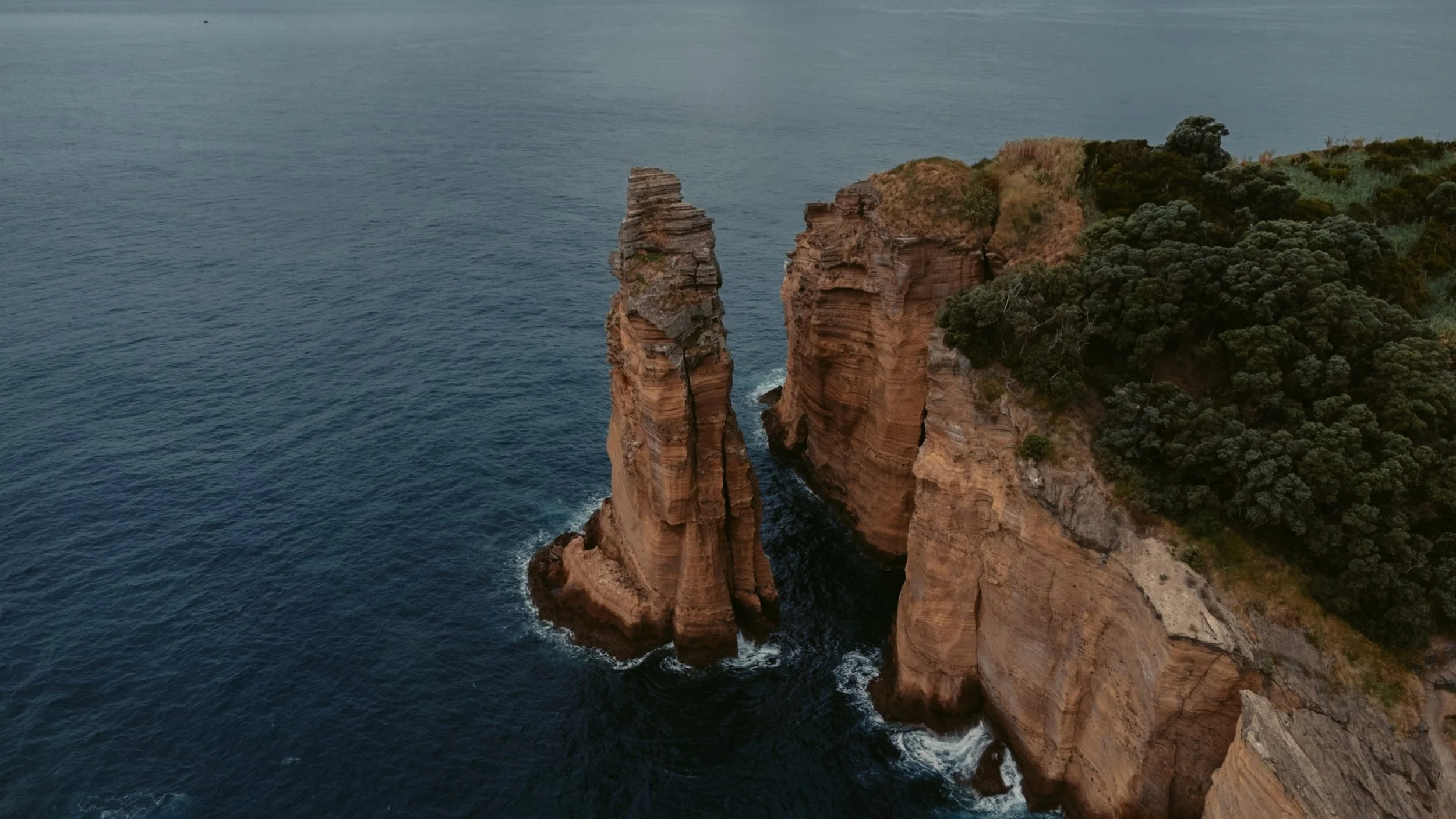
As a volcanic island, São Miguel is abundant in lush flowers, trees and tropical species that grow as a result of the warm climate, carpeting the island in colour.
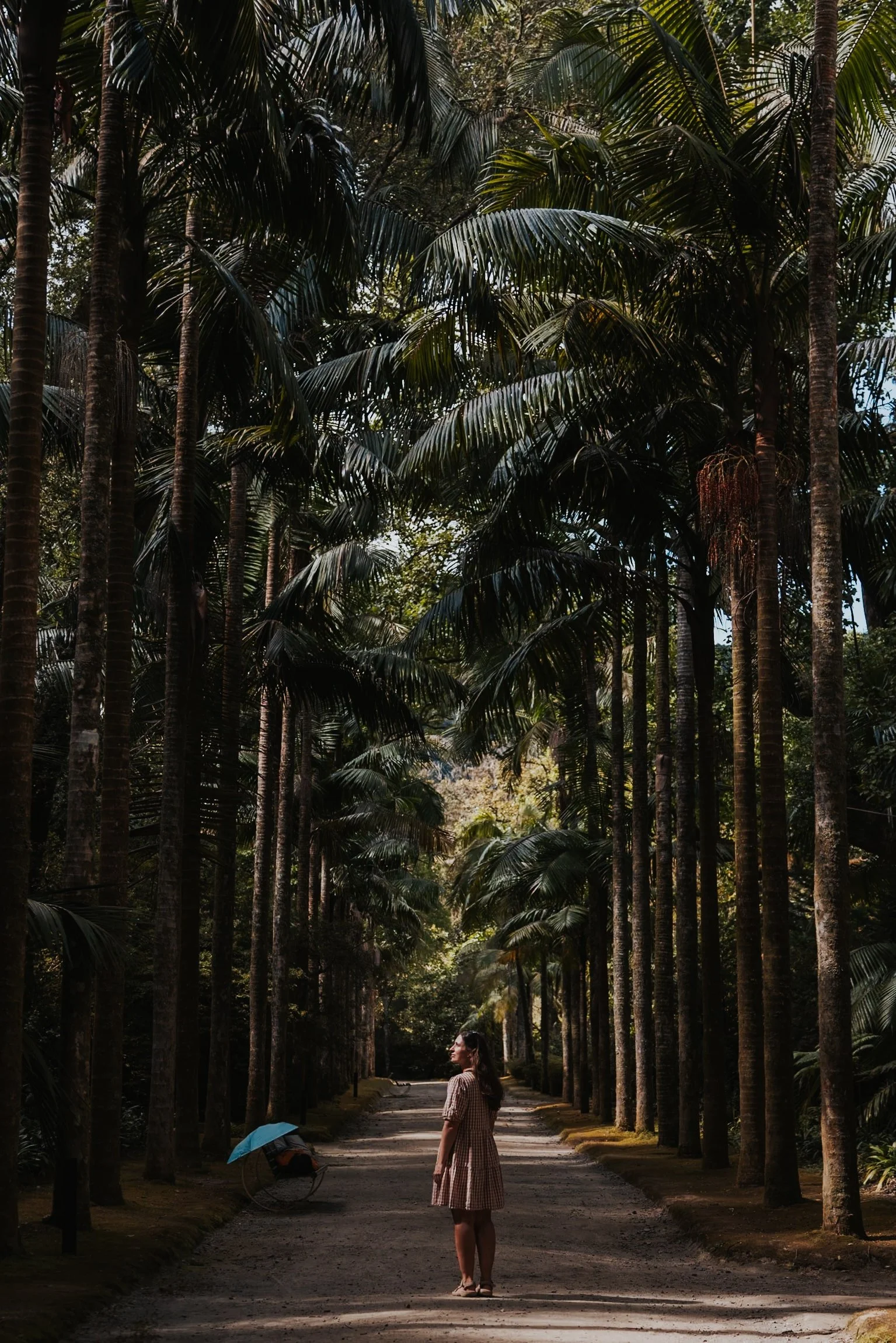
Terra Nostra Park
São Miguel is home to many beautiful gardens and parks, but one of our favourites is Terra Nostra Park. These expansive gardens are part of the Terra Nostra Garden Hotel, which opened in 1953.
Considered one of the island’s best gardens, Terra Nostra Park is a paradise for plant and nature lovers. The park also features mineral-rich thermal pools, perfect for a relaxing dip. If you plan to swim, we recommend dark-colored swimwear.
Even if you don’t take a dip, wandering the grounds is a treat. You can stumble upon hidden sculptures, statues, serene lakes, wildlife, charming bridges, and more. With 1,800 botanical species and over 2,000 types of trees, the park has a truly enchanting atmosphere.
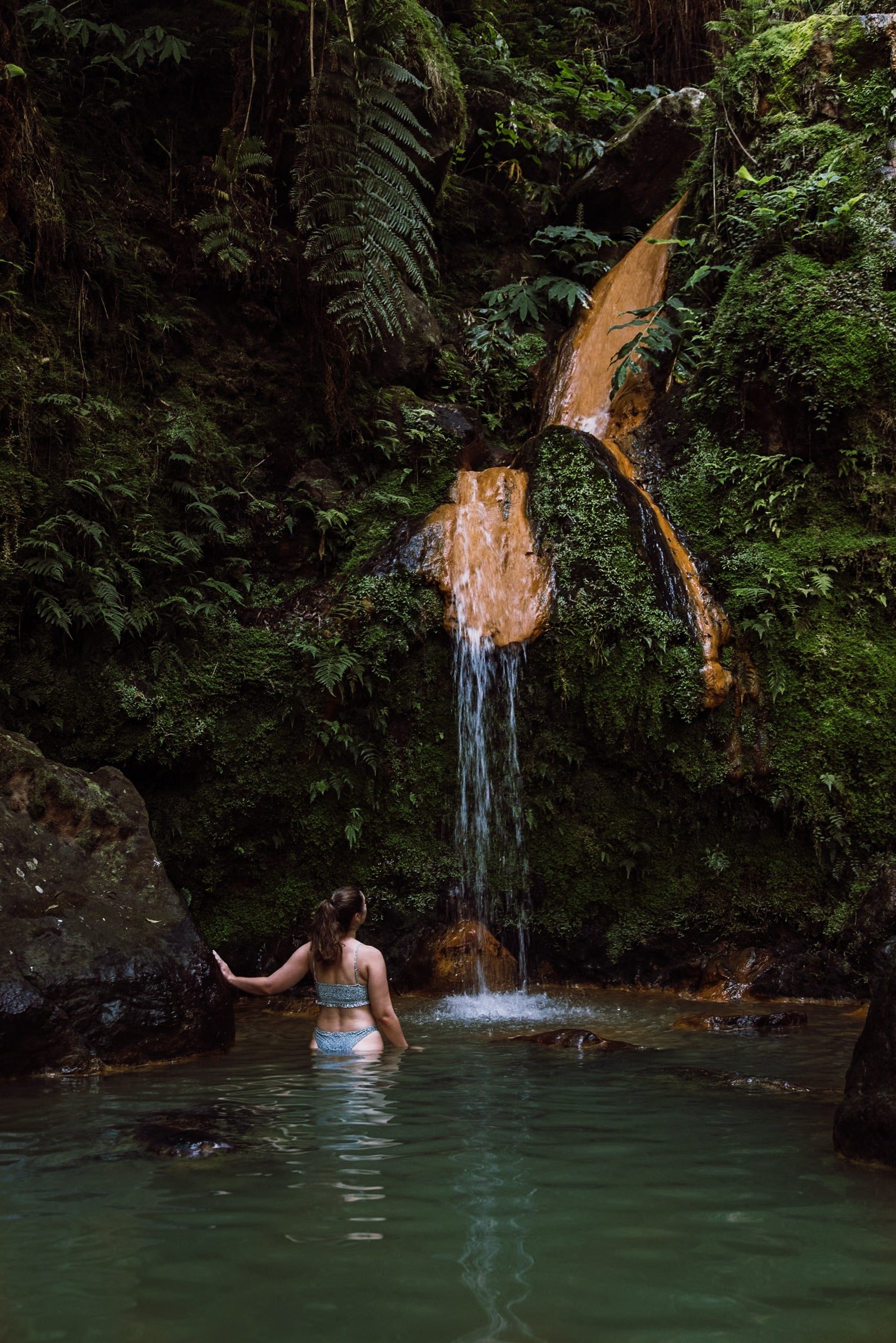
Caldeira Velha
The Caldeira Vehlha hot springs are hidden away in a forested valley, which is unlike anything you’ve seen before. Located in the shadow of Volcano Água de Pau, you are transported into this tropical oasis of huge ferns, waterfalls and magical thermal pools.
This was one of the busiest spots on the island when we visited. You have an allocated time slot when booking your visit, as the pools are relatively small and to ensure you can enjoy the experience. There’s a large Interpretation Centre with all the information on the surrounding landscape and its volcanic origins.
Continue past the main thermal pools to discover the hidden Salto do Cabrito waterfall, a stunning and much cooler pool that feels like a fairytale. This is the perfect place to relax after a day exploring the island and letting your muscles relax for another day of adventure ahead. It’s just around the corner from Lagoa Fogo, so we’d recommend seeing these two sights together.
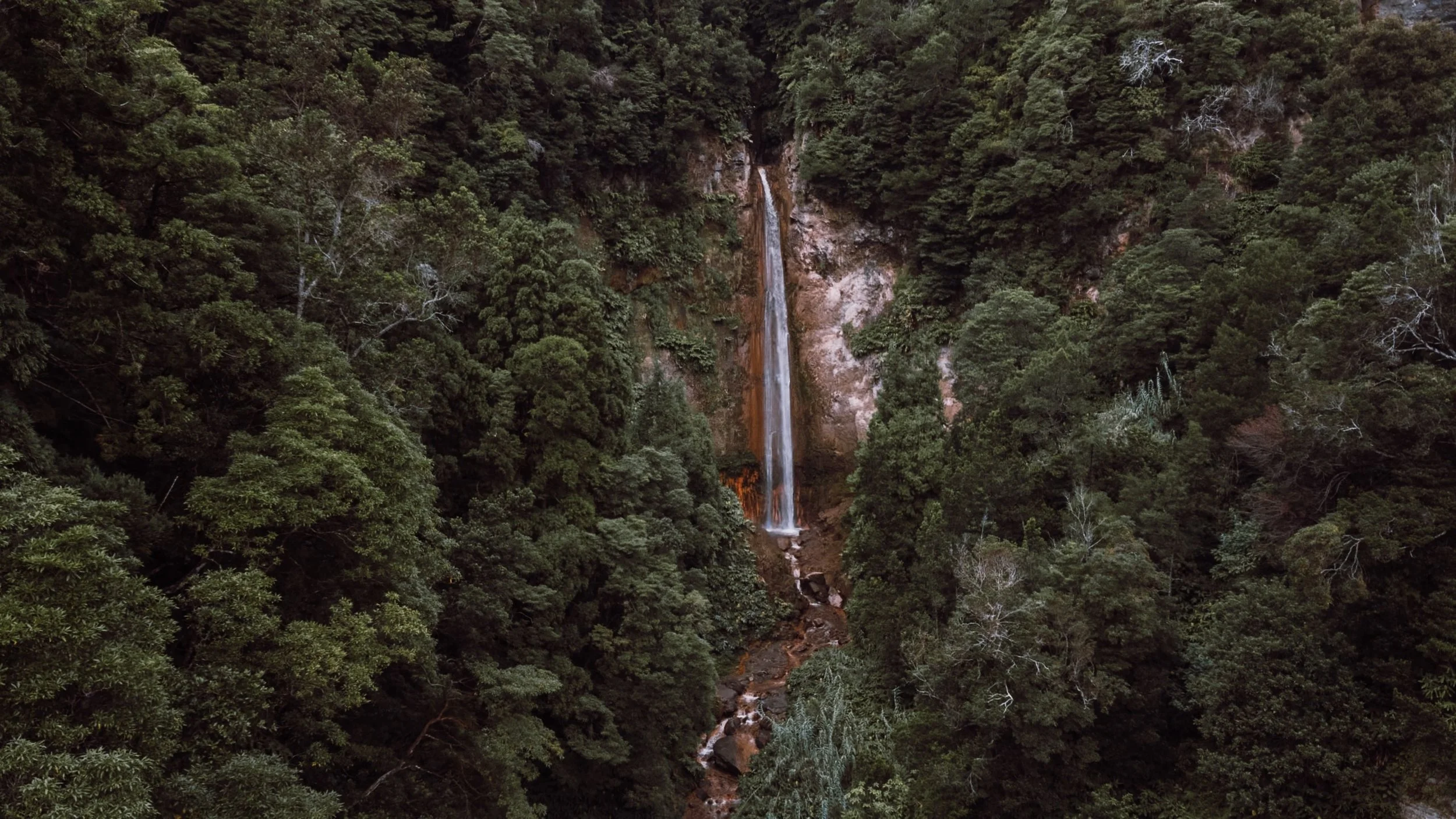
RIBEIRA QUENTE WATERFALL
Cascada da Ribeira Quente, located south of Furnas on the road to Ribeira Quente, is surrounded by lush green alocasia and bright ginger lilies. The waterfall tumbles into a calm pool, creating a peaceful and scenic spot.
Park near the tunnel and take a short walk through it to reach the falls. The path can be slippery, so water shoes are recommended, and a phone light helps with visibility for passing cars. We stopped at a log crossing, which offers a great view of the waterfall without risking the slippery terrain.
Beyond its natural beauty, São Miguel has a rich history, architecture and cultural experiences that will allow you to gain a deeper understanding of island life.
Ponta Delgada
The island’s capital, Ponta Delgada, is full of charming streets, scenic promenades, leafy gardens, historic churches, 16th-century forts, and excellent restaurants. Take a walk along the waterfront for a peaceful stroll, then wander over to the José do Canto and António Borges botanical gardens for a quiet break from city life.
For lunch with beautiful harbour views and the freshest fish, we highly recommend Cais da Sardinha. If you want a traditional tavern experience, head to A Tasca to try authentic Azorean dishes. Be prepared for a queue, as they don’t take bookings, but it is well worth the wait.
Furnas Village
As you drive toward Furnas Village, it feels as though you are stepping back in time. Volcanic steam rises into the sky and partially hides the village from view, creating an almost mystical atmosphere. The village sits in one of the most panoramic spots on São Miguel, surrounded by lush green hills.
The geothermal activity in Furnas has inspired locals to use this natural power to cook Cozido das Furnas, an Azorean dish made with potatoes, vegetables, and meats. It develops a unique flavour thanks to the slow underground cooking process. You can watch the Cozido being unearthed at Lagoa das Furnas and then taste it at one of the nearby restaurants.
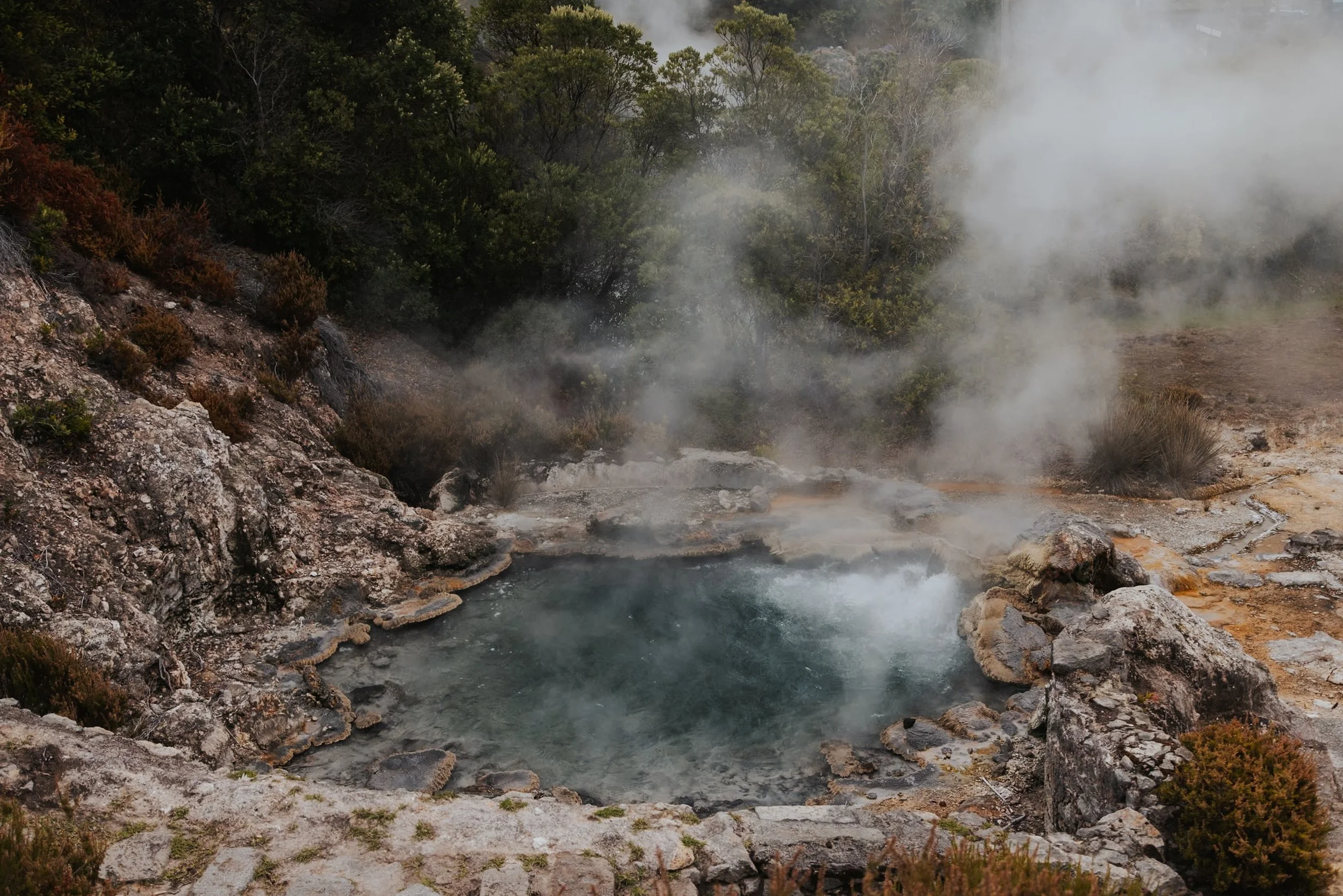
While you are in the village, take time to wander the quiet streets and visit the thermal springs, where steam rises from the ground, and hot pools bubble away. And don’t forget to explore Terra Nostra Gardens, also located in the village and mentioned above.
Best time to Visit São Miguel
We visited the Azores at the end of summer in September, which allowed us to avoid the busiest period while still enjoying mild weather. October offers similar conditions and is another great option. Spring, from April to June, is also an ideal time to visit, with comfortable temperatures and fewer crowds.
How long to stay on São Miguel?
A minimum of 4 days is ideal to explore São Miguel, giving you time to enjoy a variety of activities and visit some of the island’s most beautiful sites. If you plan to explore another island as part of an Azores trip, we recommend 7 days, allowing you to experience São Miguel and an additional island, such as Flores.
How to get to São Miguel?
Fly into Ponta Delgada (PDL), the main airport on São Miguel and the easiest entry point to the Azores.
Direct flights from the UK (summer only)
British Airways offers a weekly flight from London Heathrow (LHR) to Ponta Delgada from April to September. The flight time is approximately 4 hours and 20 minutes.
Year-round via Lisbon or Porto
You can fly from UK airports such as Heathrow, Gatwick, Stansted, Luton, Manchester, Bristol, or Edinburgh to Lisbon or Porto, then connect to Ponta Delgada.
Lisbon offers up to seven flights daily to Ponta Delgada, and also direct flights to Terceira, Santa Maria, and Faial. Total travel time via Lisbon is usually 8 hours or more, which can be combined with a stopover in Lisbon or Porto.
Plan your next adventure
If you book through our links, you help support our website at no extra cost to you - thank you!
Getting Around São Miguel
Airport Transfers
Once you arrive, you’ll want a smooth, stress‑free transfer to your accommodation and a good option is to pre‑book a private transfer. The provider linked below offers airport pickup with a professional driver, an air‑conditioned vehicle, and flexible cancellation options.
Car rental
The easiest way to explore São Miguel is by renting a car, which allows you to have the most freedom to reach hiking routes, remote beaches, historic lighthouses, waterfalls and charming villages at your own pace.
If you’d prefer not to drive, many guided tours are available, but keep in mind that public buses mainly connect larger towns and services are more limited in remote areas.
If you don’t drive, you can book a tour to experience the island’s highlights. Public buses run between towns, but services to more remote areas are limited.
Island Hopping
São Miguel is the main gateway to the Azores, making it easy to explore other islands by connecting flights. Flores and Corvo, the westernmost islands, are a little further to reach but well worth the effort. Flores, in particular, is renowned for its dramatic landscapes and lush scenery, almost like stepping into a movie set.
BEST APPS FOR navigating São Miguel
Organic Maps - free navigation app ideal for hiking, cycling and driving around São Miguel
Mapsme - offline maps for hiking, we use this regularly for most places we visit
AllTrails - detailed hiking maps with suggested routes you can follow, another trusty travel companion of ours
Google Maps - ideal for main roads across São Miguel, but recommend downloading offline for patchy more remote parts of the island

What’s the internet like on São Miguel?
Internet service on São Miguel can be patchy, particularly in more remote areas. We recommend downloading maps for offline navigation and getting an eSIM to stay connected while you travel.
How easy is it to Island Hop from São Miguel?
Most international flights will arrive in São Miguel, which is the gateway to the Azores. From there, you can either get connecting flights to neighbouring islands
Is it easy to drive around São Miguel?
Yes, driving around São Miguel is generally straightforward, especially on the main roads and around towns. However, some secondary roads can be steep, narrow, and winding, particularly in hilly areas. For example, the road to Faro do Arnel can be tricky, so it’s recommended to park at the top and walk if you want to visit. Overall, a car is the best way to explore the island at your own pace.
Do they speak English in the Azores?
The official language is Portuguese, although the Azoreans have their own distinct accent that varies slightly between islands. It is always appreciated if you learn a few basic phrases, especially when exploring areas away from the main tourist spots. English is widely spoken in hotels, restaurants and popular attractions on São Miguel, but do not assume everyone speaks it. Showing respect by using a few words in Portuguese is always welcome.
How many days is enough for São Miguel?
A minimum of 4 days is ideal to explore São Miguel’s highlights. For a multi-island trip, 7 days allows you to enjoy São Miguel and visit another island, such as Flores.
How do I book tours for whale watching, snorkelling, or kayaking?
Many tours can be booked online in advance. We highly recommend booking whale watching through Futurismo Azores Adventures for a memorable experience that also supports marine conservation and scientific research. Guided snorkelling and kayaking tours are available around the Vila Franca do Campo and Sete Cidades.
How much does it cost to visit the Azores?
Visiting São Miguel is generally affordable, though flights can be more expensive due to the island’s remote location. Accommodation and food offer good budget-friendly options, from guesthouses and self-catering to local restaurants. Renting a car is the easiest way to explore the island, but demand rises in summer, making early booking advisable. Peak season can also affect flight and hotel availability, so planning ensures a smoother trip.
What is the prettiest town in São Miguel?
It’s hard to pick just one, as beauty is subjective, but our top recommendations are Ribeira Grande, Ponta Delgada, Furnas Village, Nordeste, and Vila Franca do Campo. Each offers its own charm, from historic streets and colourful buildings to lush gardens, volcanic scenery, and coastal views.
Do I need a visa to visit the Azores?
Visitors from the EU, the US, Canada, and several other countries do not need a visa for short stays. Always check the current regulations for your nationality before travelling.
What wildlife can I see in São Miguel?
São Miguel is famous for whales and dolphins, visible year-round. Seabirds, endemic species like the Azores Bullfinch, and occasional sea turtles can also be spotted.
Can I swim with dolphins responsibly in the Azores?
Ethical operators like Futurismo Azores Adventures follow WCA guidelines, which prohibit direct interaction such as swimming with wild dolphins to avoid disturbance.
Are the hiking trails suitable for beginners?
Many trails, such as Sete Cidades, Lagoa do Fogo, and Gorreana Tea Plantation, offer beginner-friendly routes. Check the official Azores Tourism website for detailed information on hiking trails that will suit your fitness levels across São Miguel.
Is it worth visiting the Azores?
Absolutely. The Azores offer a unique mix of volcanic landscapes, lush forests, crater lakes, hot springs, and unspoiled beaches. São Miguel is perfect for adventure, nature lovers, and food enthusiasts to try authentic local flavours. The islands are also ideal for ethical wildlife watching, including whales, dolphins, and endemic birds.
São Miguel offers a wide range of accommodation options, from elegant hotels and boutique guesthouses to budget-friendly stays and self-catering apartments.
For a detailed guide to the best places to stay, including insider tips on hotels, guesthouses, and self-catering options, check out our complete guide to accommodation on São Miguel below.


A complete safari guide to Yala National Park that covers the best time to visit, safari costs, wildlife, what to expect and essential and responsible tips.